 Eastbound Finds
Hana here: Tokyo’s tuna auction can be watched for free, but only by about 100 people a day, picked by an online lottery a month ahead. Miss the draw and you can still look down from the second-floor visitor gallery without booking. For everything else there are guided tours: an evening walk through Shinjuku or Shibuya takes about 3 hours and covers 13–15 dishes, from about $76. Checked 16 October 2026.
Key points
- The most booked Tokyo food tours are 3-hour evening walks in Shinjuku or Shibuya with about 13–15 dishes at 4 small eateries, listed from about $76–83 per person on GetYourGuide (16 October 2026).
- Early-morning market tours combine the Toyosu tuna auction with breakfast at Tsukiji Outer Market and were listed from about $115.
- You can watch the Toyosu tuna auction for free from the observation deck, but only by winning an online lottery the month before; about 100 people per day get a place.
Show more
- Sushi-making classes in Asakusa (about 100 minutes, from about $57) are the easiest hands-on option for families.
- Tell the tour about allergies and your diet when you book, and check the cancellation deadline on the listing.
Why Tokyo’s food alleys are worth a guide
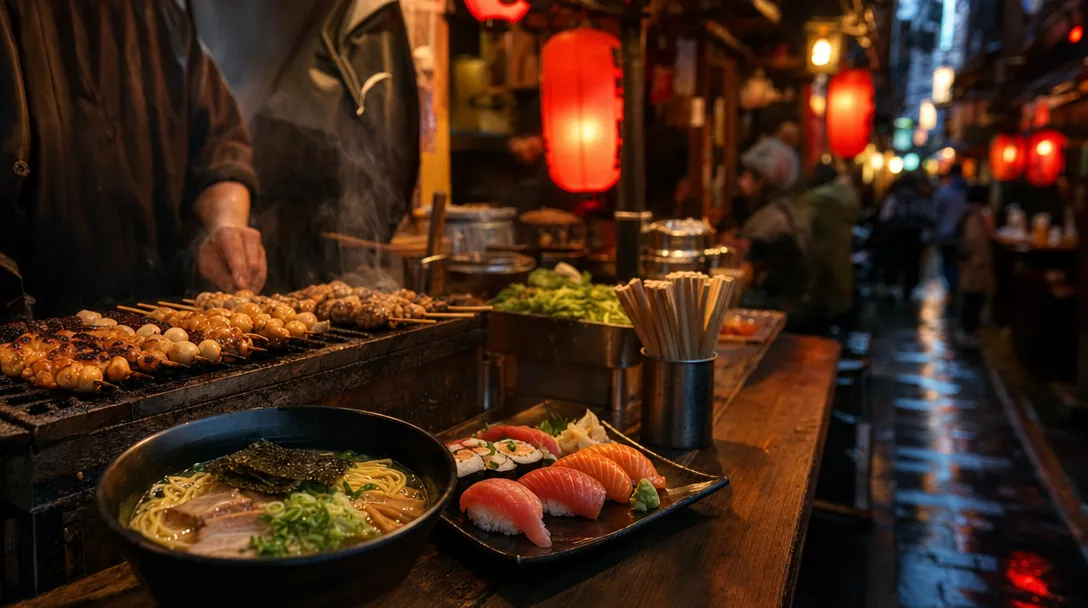
Many of the places these tours visit grew out of the years right after World War II. Omoide Yokocho, the lantern-lit alley by Shinjuku Station’s west exit, began as a black market of stalls separated by single boards around 1946. According to the alley’s own history page, when flour for ramen was cracked down on around 1947, stalls switched to grilling beef and pork offal, which was not rationed. That is why, of its roughly 60 restaurants today, more than half are yakitori or motsuyaki (grilled offal) counters.
AdvertisingQuick pick: Food and drink tours in Tokyo (Shinjuku, Shibuya, Tsukiji) – GetYourGuide
 Mikan's note: Book your food tour for your first or second evening, so you know what to order for the rest of the trip. For the free tuna auction deck, bring your passport: everyone in the group is ID-checked, and no ID means no entry. Rules on buying or importing this kind of product differ by country. Please check your local regulations and the product label.
A few minutes’ walk east, Shinjuku Golden Gai grew from another black market that the Occupation authorities moved there in the months after the war ended in 1945. Today more than 280 bars of only 10–15 square metres each are packed into its lanes (nippon.com), so a guide who knows which doors welcome first-time visitors saves you a lot of guessing. Golden Gai sits right next to Kabukicho, the real district behind Kamurocho in the Yakuza games (what matches the games and what does not). Then there is Tsukiji Outer Market (more on it below), where the shops still sell food in small, ready-to-eat portions.
Tokyo food tours compared
Prices are the lowest “from” prices shown on GetYourGuide’s Tokyo food & drinks page on 16 October 2026, in US dollars per person. They change with dates and discounts.
| Type | Where | How long | From | Best for |
|---|---|---|---|---|
| Evening food walk (13–15 dishes, 4 eateries) | Shinjuku, Shibuya | 3 hours | about $76–83 | First visit, curious eaters |
| Bar and izakaya crawl | Shinjuku | 3 hours | about $36 | Adults who drink |
| Toyosu tuna auction + Tsukiji market breakfast | Toyosu, Tsukiji | about 3.5 hours, very early | about $115 | Seafood lovers, early risers |
| Sushi-making class | Asakusa | about 100 minutes | about $57 | Families, hands-on cooks |
| Ramen class (tonkotsu, shoyu, miso) | Shibuya | about 1.5 hours | about $111 | Ramen fans |
| Sake tasting with a specialist | Asakusa | about 105 minutes | about $51 | Adults who want to learn sake |
Most of these listings are guided in English; the language is shown on each listing, and you can filter by it.
 Related guidesCultural Experiences in Japan: How to Choose and Book (Without Japanese)
What’s included, group size, age and tipping
Before you pay, open the “What’s included” part of the listing and check four things, because they vary a lot between tours that look the same (rules below checked 21 October 2026):
- Food and drinks: how many dishes (food walks often say 13–15) and whether drinks are included, and how many. “1 drink per stop” and “all-you-can-drink” are very different tours.
- Group size: small-group tours state a maximum. Smaller groups fit better into counter bars that seat only a handful of people.
- Age: the legal drinking age in Japan is 20, not 18. Japan lowered the age of adulthood to 18 in April 2022, but the drinking age stayed at 20 (National Tax Agency). Bar crawls may refuse under-20s, and on food walks they get soft drinks.
- Tipping: not needed. The Japan National Tourism Organization says tipping is not common in restaurants, bars, cafes or taxis. A private guide used to overseas customs may accept one, but it is not expected.
The free option: the Toyosu tuna auction lottery
Tours are not the only way to see the famous tuna auction. Toyosu Market, run by the Tokyo Metropolitan Government, lets visitors watch it for free from an observation deck close to the floor. The catch is that places are given by online lottery, not first come, first served:
- When to apply: in the month before. For August 2026, applications ran from 1 to 7 July and results came out on 16 July.
- How many: about 100 people per day, up to 5 people per application, one application per group. The person who applies must be of junior-high-school age (about 12) or older, and babies count towards the 5.
- On the day: meet at 5:30 am at the PR Corner (Block 7 administration building, 3rd floor). Viewing runs from 5:45 to 6:25 am. Photos are allowed, but not flash.
- ID: everyone, including companions, must show photo ID such as a passport.
- If you are not drawn: you can still see the market floor from the 2nd-floor visitor corridor, no booking needed.
The market is closed on Sundays, public holidays and some Wednesdays, so check the calendar before you plan. The nearest station is Shijo-mae on the Yurikamome line, about 5 minutes on foot.
A paid tour makes sense if you missed the lottery, do not want to deal with a Japanese application form, or want a guide to explain the bidding and then take you to Tsukiji Outer Market for breakfast.
Tsukiji Outer Market on your own
The old wholesale market moved to Toyosu, but Tsukiji Outer Market is still Tokyo’s “food town”. Many shops sell small, ready-to-eat portions, such as a few pieces of sushi or a bite-sized slice of tamagoyaki (rolled omelette), so you can graze. The streets are a maze, and some buildings are more than 80 years old. The official site has a map and a calendar of closed days.
How to choose
- Diet and allergies: say it when you book. Japanese soup stock (dashi) is usually made from fish, so “no meat” does not mean vegetarian.
- Children: sushi and ramen classes work well; bar crawls and sake tastings are for adults.
- Timing: do the food walk early in your trip. Leave a free morning if you want the 5:30 am tuna auction. Planning a Mt Fuji day trip from Tokyo too? Keep that morning free as well, since the mountain is most often visible early in the day.
- Cancellation: check the deadline on the listing before you pay.
If sushi is the main reason you are going, read our guide to sushi in Japan and sushi-making classes. Booking a ramen class? Our guide to ramen types, from shoyu to tonkotsu explains the broths before you go. For crafts, tea and other workshops, see cultural experiences in Japan. Want tea with your meal? Try types of Japanese green tea.