 Eastbound Finds
Want to try a tea ceremony, wear a kimono or make your own sushi in Japan? This guide compares the most popular cultural experiences in Japan – how long they take, roughly what they cost, whether you can join without speaking Japanese, and what to check before you book. In short: many experiences in Tokyo and Kyoto can be booked online in English; the main things to check are the cancellation rules, age limits and food restrictions. Prices checked on 10 October 2026; kintsugi and sumo added and checked on 19 October 2026.
Key points
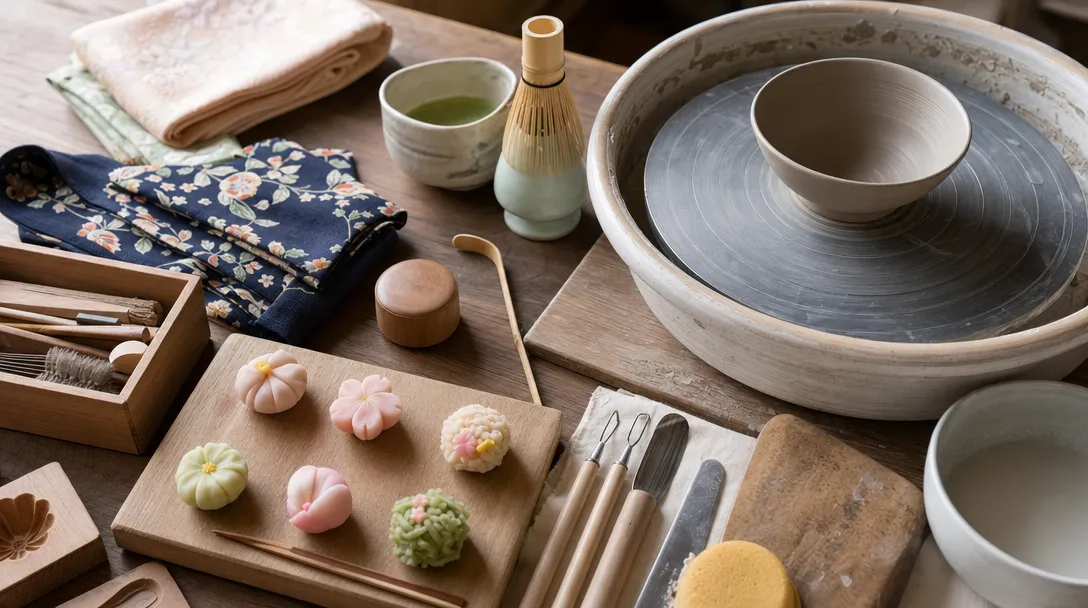
- Popular cultural experiences in Japan include a tea ceremony, kimono rental, sushi or wagashi (Japanese sweets) making and a pottery class – plus kintsugi and sumo.
- You do not need to speak Japanese for many of them: tea ceremonies, kimono rentals and cooking classes in Tokyo and Kyoto are often booked online in English.
- Cooking and pottery classes usually take 1 to 3 hours; kimono rentals usually last the day and must be returned by the shop's set time.
Show more
- Check the cancellation deadline (often 48 hours for cooking classes), the minimum age and whether the class can handle your diet before you pay.
- In pottery classes the pieces you make are fired later and shipped after several weeks, so ask about overseas shipping.
Popular cultural experiences in Japan compared
The “Language” column shows how easy it is to join without Japanese, based on the example we checked: ◎ = booking and guidance in English, ○ = Japanese only, but you can book online and join with a translation app, △ = hard with a translation app alone.
AdvertisingQuick pick: Tea ceremonies in Kyoto – GetYourGuide
 Mikan's note: Wait! Before you pay, note the free-cancellation deadline (often 48 hours before for cooking classes) and write your diet (halal, vegetarian, allergies) in the booking: mirin and dashi (fish stock) are everywhere.
| Experience | Typical time | Example we checked (10 Oct 2026) | Language |
|---|---|---|---|
| Tea ceremony | varies (short sessions for visitors) | Camellia, Kyoto: shared session from 4,000 yen per adult, children 6–12 from 2,500 yen | ◎ English site with online booking |
| Kimono rental | the whole day | Waraku, Kyoto: plans from 1,980 yen, return by the shop’s set time | ◎ English site with online booking |
| Sushi making | about 1.5–2.5 hours | Cookly listing in Asakusa, Tokyo: US$156 per person, vegetarian menu | ◎ class language listed as English |
| Wagashi (Japanese sweets) making | about 2–3 hours | Cookly listing in Tokyo: vegan and gluten-free ingredients, no children aged 4 or under | ◎ class language listed as English |
| Pottery class | for example about 1 hour | Uzumako, Tokyo: about 1 hour, pieces shipped within around a month (Japan Objects) | language not confirmed – ask the studio |
| Kintsugi (gold repair) | 1 hour | Tsugu Tsugu, Asakusa, Tokyo: discovery workshop, booking required (JNTO) | ◎ guided in English |
| Sumo | a tournament day, or morning practice | Six tournaments a year, three of them at Ryōgoku Kokugikan, Tokyo (January, May, September); stable practice through small-group tours (JNTO) | not graded – depends on the tour |
| Local classes on Japanese-only booking sites | varies | – | ○ online form in Japanese |
| Classes booked by phone only or by introduction | varies | – | △ see below |
Prices and plans change often. Always check the current price on the booking page before you pay.
Tea ceremony: what happens and what to wear
In a tea ceremony (sadō or chanoyu) a host prepares matcha in front of the guests, and you are served a seasonal sweet and a bowl of tea. Japan’s tourism organization (JNTO) notes that many places offer shorter versions for visitors, and that small mistakes are usually forgiven – making an effort to follow the steps is what matters. Typical steps: take off your shoes, sit (often in seiza, kneeling), hold the bowl with both hands, turn it slightly so you do not drink from the front, and thank the host.
You do not need formal clothes for a visitor session. Clothes that let you kneel or sit on the floor comfortably are best. Planning it in Kyoto? Our guide to Kyoto experiences shows which tea houses and kimono shops sit near Gion and Arashiyama, and what the city’s accommodation tax adds to your stay. If you want to know more about the tea itself, read our guide to choosing matcha.
 Related guidesTokyo Food Tours: Which One to Book (Shinjuku, Tsukiji, Tuna Auction)
Kimono rental: how it works
Kimono rental shops in Kyoto and Tokyo dress you, sometimes style your hair, and you walk around in the kimono for the day. Waraku in Kyoto says on its English site that you can book online and that same-day booking may be possible when there is space. Points to check:
- Return time: shops set a return time on the same day; returning the next day may cost extra.
- What is included: check whether dressing, sandals, a bag and hair styling are in the plan or cost extra.
- Weather: in summer, ask about yukata (a light cotton kimono).
Sushi and wagashi making classes
Cooking classes are a good choice for families and rainy days. The sushi class we checked in Asakusa lists English as the class language, free cancellation until 48 hours before the start and a vegetarian menu. The wagashi class we checked is taught in English and says the sweets are made from beans, sugar and mochi powder (vegan and gluten-free); children aged 4 or under cannot join.
If you have allergies or follow a halal, vegan or other diet, write it in the booking and ask before you pay – Japanese seasonings such as mirin and dashi (fish stock) are common in cooking classes. For sushi in more detail, see our guide to sushi in Japan and sushi-making classes.
Pottery and kintsugi
In a one-day pottery class you shape a cup or bowl on the wheel or by hand. Your piece is not finished on the day: it has to dry and be fired, so it is shipped later. One Tokyo school in the Japan Objects list ships pieces within around a month. Ask whether the school ships abroad and how much it costs, or choose a painting class where you decorate a ready-made piece.
Kintsugi is a centuries-old Japanese technique for repairing broken ceramics: instead of hiding the crack, it highlights it with gold (JNTO). In Tsugu Tsugu’s one-hour discovery workshop in Asakusa, you apply the final layer of red lacquer and gold powder to a piece that has already been partly repaired, and take it home once the lacquer has hardened.
Sumo: a tournament or morning practice
Six sumo tournaments are held each year: in Tokyo (Ryōgoku Kokugikan) in January, May and September, in Osaka in March, in Nagoya in July and in Fukuoka in November (JNTO). Outside tournaments, wrestlers train in the morning at their stables (heya), many of them near the Kokugikan. JNTO says casual, spontaneous visits are not encouraged; some travel agencies arrange small-group tours. For the 2027 tournament dates, ticket sale days and seat prices, see how to watch sumo in Japan.
Booking: what to check before you pay
- Where to book: the official site of the tea house, shop or school, or a booking site (for example Cookly, byFood, Klook, GetYourGuide or Viator). Booking sites show the class language, reviews and cancellation rules in one place; the official site sometimes has more plans.
- Cancellation: many cooking classes allow free cancellation until 48 hours before the start; some shops are stricter. Read the rule for your exact plan.
- Children: check the minimum age. Some classes do not accept small children for safety reasons.
- Food restrictions: write them in the booking. Do not assume a class is halal or vegan unless the listing says so.
- Payment: prices are usually in yen; your card will charge you in your own currency at your bank’s rate.
- Timing: spring (cherry blossom season), autumn and weekends fill up first. Book a few weeks ahead if your dates are fixed, and check our Japanese festivals calendar to avoid Golden Week.
When an experience is hard to join without Japanese (△)
Some traditional classes are booked by phone only, accept guests only through an introduction, or need a detailed safety briefing in Japanese. A translation app alone is usually not enough for these. Ways to join anyway:
- book a tour that includes an interpreter or English guide;
- ask your hotel or ryokan to make the phone booking for you;
- choose a similar class that lists English as the class language.