 Eastbound Finds
Japan’s winter light shows began in Sapporo in 1981 with about 1,000 bulbs. Ashikaga Flower Park, north of Tokyo, now lights more than 5 million. Hana here: below are the 2026–27 dates and prices for six of the best-known shows, checked on each organiser’s official page on 28 October 2026, plus which ones you can walk into for free.
Key points
- Japan's big winter light shows run from mid-October to March: Ashikaga Flower Park from 17 October 2026 to 14 February 2027, Sapporo from 20 November, Huis Ten Bosch from 6 November and Kobe Luminarie only from 29 January to 7 February 2027.
- Sapporo White Illumination and Tokyo's Marunouchi Illumination are street displays you can walk through for free; Nabana no Sato, Ashikaga Flower Park and Huis Ten Bosch charge admission.
- Ashikaga Flower Park lights more than 5 million bulbs over 100,000 m² and won the International Illumination Award's top prize in November 2025; adult night admission is ¥1,500.
Show more
- At Nabana no Sato near Nagoya, 23–25 December needs a date-specific advance ticket; on other days admission is ¥2,500–3,200 and includes a ¥1,000 voucher.
- Tokyo's sun sets at 4:28 pm every day from 1 to 13 December 2026, so illuminations are lit well before dinner.
Japan winter illuminations 2026–27 at a glance
| Light show | Where | 2026–27 dates | Price | English info |
|---|---|---|---|---|
| Ashikaga Flower Park “Flower Fantasy” | Tochigi (day trip from Tokyo) | 17 Oct – 14 Feb (closed 31 Dec) | Adults ¥1,500 | ◎ English page |
| Nabana no Sato | Kuwana, near Nagoya | 17 Oct – 31 May (closed 6–7 Jan) | ¥2,500–3,200, voucher included | Japanese only |
| Huis Ten Bosch “The Starlight Million” | Sasebo, Nagasaki | 6 Nov – 25 Feb | Park ticket: from ¥7,600 (1 day) or ¥5,900 (from 3 pm) | ◎ English web tickets |
| Marunouchi Illumination | Tokyo Station area | 12 Nov – 14 Feb | Free last season; 2026 not stated yet | ◎ English page |
| Sapporo White Illumination | Central Sapporo | 20 Nov – 14 Mar (varies by venue) | Free | ◎ English page |
| Kobe Luminarie | Central Kobe | 29 Jan – 7 Feb 2027 | Paid area ¥500–1,500 | Japanese only |
The table uses the organisers’ own figures. Where a 2026–27 number hasn’t been published yet, we say so rather than repeat last year’s.
AdvertisingQuick pick: Hotels in Tokyo for Marunouchi and Ashikaga – Trip.com
 Mikan's note: Organisers say plans can change, so check the official page the week you go – Marunouchi's tree show, for example, runs only from 17:00 to 21:00. Nabana no Sato on 23–25 December needs a ticket for the exact date – no ticket, no entry unless any are left at the gate.
Why the lights come on so early
In Tokyo, the sun sets at 4:28 pm every day from 1 to 13 December 2026, and even on Christmas Day it sets at 4:33 pm, according to the National Astronomical Observatory of Japan. That’s why many shows switch on around 4:30 pm, and why an illumination fits easily between sightseeing and dinner. Ashikaga lights up at about 4:30 pm from 7 November to 3 January and about 5 pm on other days; Nabana no Sato and Huis Ten Bosch go by the sunset.
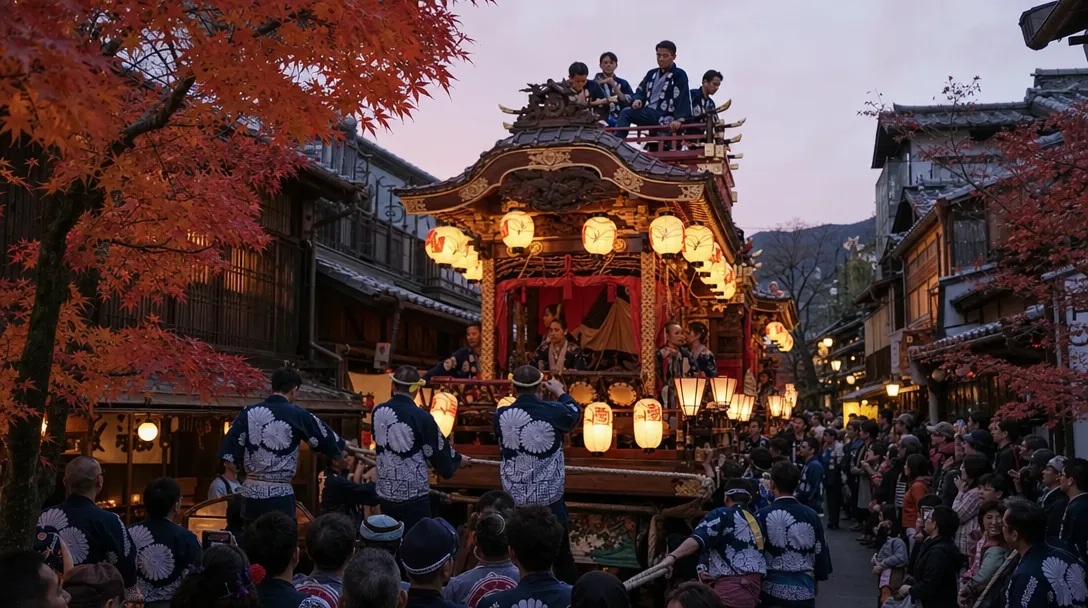 Related guidesAutumn Festivals in Japan: 7 Float and Fire Festivals from September to November
Ashikaga Flower Park: more than 5 million bulbs
Ashikaga Flower Park turns its 100,000 m² garden into “Flower Fantasy” from 17 October 2026 to 14 February 2027. The park says it uses more than 5 million bulbs, and in November 2025 it won the top prize at the International Illumination Award.
- Hours: night admission 3:30–8:30 pm on weekdays (9 pm at weekends). From 7 November to 3 January it stays open until 9 pm on weekdays and 9:30 pm at weekends. Day and night admission are separate.
- Price: adults ¥1,500, children ¥800; night tickets go on sale at the park from 3:30 pm. The park notes that dates and hours can change depending on how the flowers are doing.
- Getting there: JR Ryomo Line to Ashikaga Flower Park station.
Nabana no Sato: the 200-metre tunnel of light near Nagoya
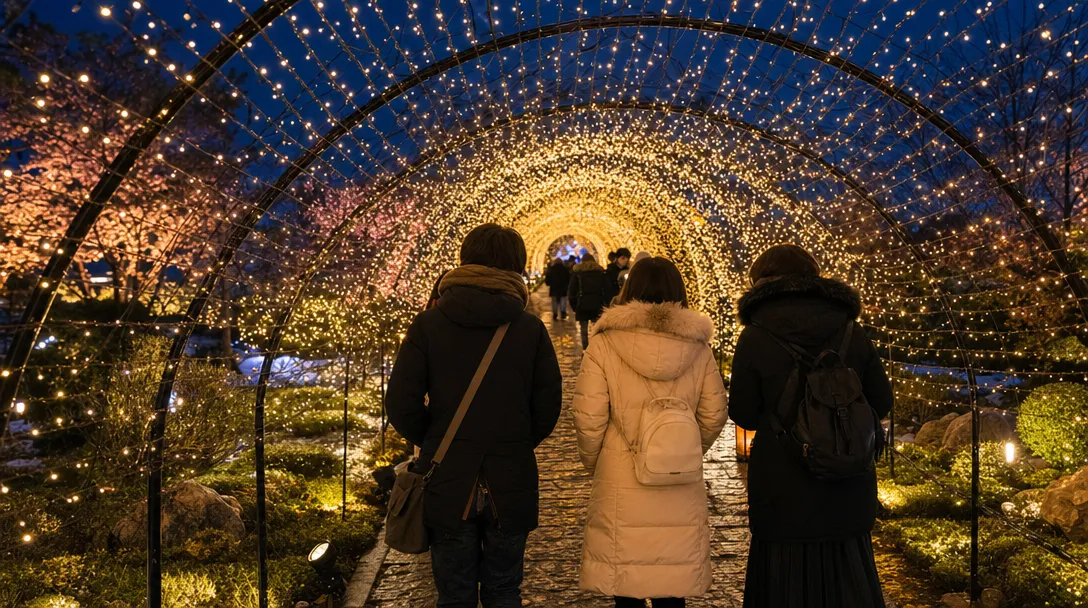
Nabana no Sato, a flower park in Nagashima, is best known for its 200 m tunnel of light. The 2026–27 season runs from 17 October 2026 to 31 May 2027 (closed 6–7 January), the longest season of the six shows here.
Admission comes with a ¥1,000 voucher you can spend in the park’s shops and restaurants. It is cheaper if you buy at a Japanese convenience store than at the gate:
| Dates | Convenience store | At the gate |
|---|---|---|
| 17 Oct – 20 Nov | ¥2,500 | ¥2,700 |
| 21 Nov – 22 Dec | ¥3,000 | ¥3,200 |
| 23–25 Dec | Date-specific advance ticket required | ¥5,500, only if any are left |
| 26 Dec – 28 Feb | ¥3,000 | ¥3,200 |
| 1 Mar – 31 May | ¥2,500 | ¥2,500 |
From 21 November to 28 February, a special sound-and-light show plays in the Begonia Garden after the lights come on. Buy your ticket at a convenience store (FamilyMart or 7-Eleven) before you go: without one, getting a ticket at the gate can take more than 30 minutes. Getting there: take a Kintetsu semi-express from Kintetsu Nagoya to Kintetsu Nagashima (about 25 minutes, every day; the faster express, about 17 minutes, stops there only on some weekend and holiday trains), then the direct bus (about 10 minutes). There is also a direct bus from the Meitetsu Bus Center in Nagoya (about 30 minutes, no booking). There is no direct bus from Kuwana station.
Huis Ten Bosch: a brand-new show for 2026
Huis Ten Bosch, the Dutch-style theme park in Nagasaki, held its “number one in Japan” title for 13 years running: first place in the Yakei Convention Bureau’s Illumination Award from 2013 to 2022, then in the International Illumination Award’s illumination events category from 2023 to 2025. For 2026 it has rebuilt the show for the first time in 16 years. The new show, “The Starlight Million”, runs from 6 November 2026 to 25 February 2027.
The lights are inside the park, so you need a park ticket. For an evening visit, the After 3 Passport costs less (from ¥5,900 for adults, valid from 3 pm); a 1 DAY Passport starts at ¥7,600. The park is a 7-minute walk from JR Huis Ten Bosch station, and it is closed from 12 to 15 January 2027.
Tokyo: Marunouchi’s champagne-gold street
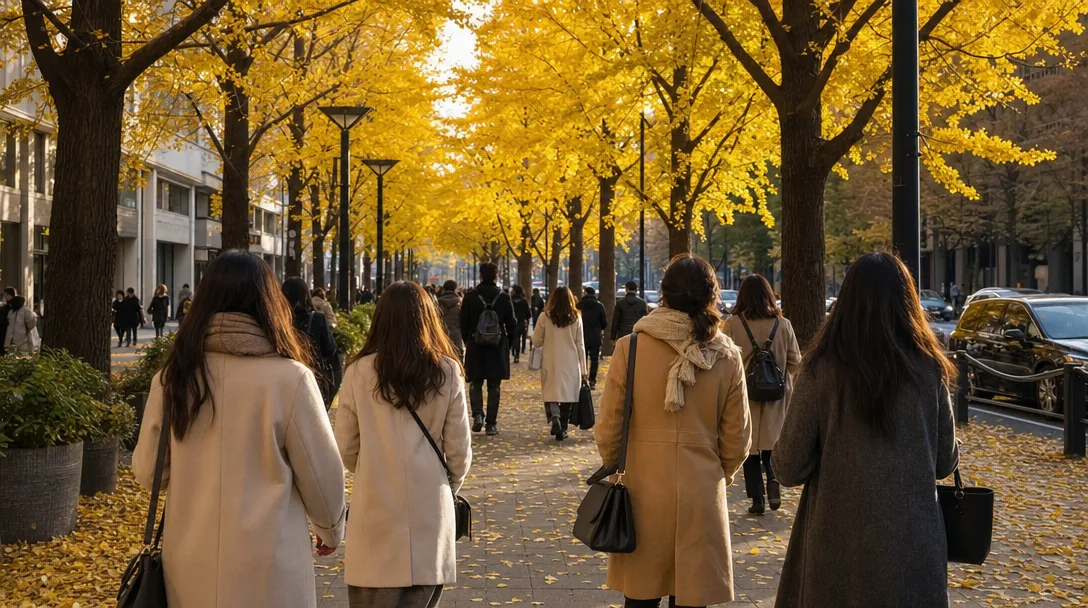
You don’t have to leave central Tokyo. Marunouchi Illumination lines about 1.2 km of Naka-dori, the tree-lined street west of Tokyo Station, in champagne-gold light from 12 November 2026 to 14 February 2027. The lights are on from 4 pm to 11 pm, and until midnight throughout December (the first evening, 12 November, starts later because of the lighting ceremony). This year’s Bright Holiday events are themed on Harry Potter: from 12 November to 25 December a Christmas tree decorated with the four Hogwarts houses runs a lighting show of “magical snow” set to the films’ music, about 3 minutes long, every 15 minutes from 5 pm to 9 pm (Marunouchi.com, checked 30 October 2026; the official map shows where each spot is). From 12 November to 25 December, a winter terrace on Naka-dori has seats in the street from 11 am to 10 pm, so you can sit outside under the lights.
Pair it with the Christmas season in Japan, when the city is at its brightest, or come earlier for the last of the autumn leaves.
Sapporo White Illumination: where it all began
Sapporo’s tourism association says Japan’s tradition of seasonal lights began here in 1981. The 46th edition starts on 20 November 2026 and is free.
- Odori venue: 20 November – 25 December, 4:30–10 pm (until midnight on 23–25 December).
- Ekimae-dori (the street between JR Sapporo station and Susukino): until 11 February 2027.
- Minami-ichijo-dori and the station squares: until 14 March 2027.
- Nakajima Park: new for 2026, planned for early to late January 2027.
Kobe Luminarie: ten days in winter
Kobe Luminarie began as a memorial to the victims of the Great Hanshin-Awaji Earthquake and a prayer for the city’s recovery. The 32nd edition is short and late: 29 January to 7 February 2027, across Meriken Park, Higashi Yuenchi park and the old foreign settlement. The organisers have published prices for the paid area in Meriken Park: ¥500 on weekdays and ¥750 at weekends in advance, or ¥1,000 and ¥1,500 on the day. The official site, updated on 30 October 2026, gives the lighting hours as dusk to 9:30 pm and this year’s theme as “A thousand melodies lit at the port”.
Which one should you pick?
- Only in Tokyo: Marunouchi in the evening, or a day trip to Ashikaga Flower Park.
- Visiting Nagoya, Kyoto or Osaka: Nabana no Sato, and Kobe Luminarie at the end of January.
- Kyushu: Huis Ten Bosch, now with a new show.
- Snow and lights together: Sapporo, where some venues stay lit until March.
For the other big moments of the Japanese year, see the festivals calendar. And if you’re in Japan on 24 December, why do so many couples book a dinner table that night? The answer is in how Japan celebrates Christmas.