 Eastbound Finds
Hana here: from September to early November, towns across Japan haul out floats that weigh tons, and near Kyoto a mountain village is lit by torches. If you are planning now, three of the seven festivals below are still to come in 2026: Jidai Matsuri and the Kurama Fire Festival on 22 October, and Karatsu Kunchi on 2–4 November. Dates, prices and rules were checked on the official city, festival and tourism sites on 20 October 2026.
Key points
- Still to come in 2026: Kyoto's Jidai Matsuri and the Kurama Fire Festival on 22 October, and Karatsu Kunchi (Saga) on 2–4 November.
- Kishiwada Danjiri (Osaka) is on the weekend before Respect for the Aged Day in September, Nagasaki Kunchi on 7–9 October, Takayama on 9–10 October and Kawagoe (near Tokyo) on the third weekend of October.
- By these fixed rules the 2027 dates should be about 18–19 Sept (Kishiwada), 7–9 Oct (Nagasaki), 9–10 Oct (Takayama), 16–17 Oct (Kawagoe), 22 Oct (Jidai and Kurama) and 2–4 Nov (Karatsu).
Show more
- The Nagasaka steps at Nagasaki Kunchi cost nothing, but you need a Nagasaka ticket won in a postcard lottery (in 2026: postcards from 1 to 21 July, draw on 26 July).
- Jidai Matsuri paid seats cost ¥5,000–¥7,500 (about $32–$47), and only the ¥13,500–¥15,500 Outenmon special seats have English commentary; Karatsu Kunchi has no paid seats at all.
AdvertisingQuick pick: Hotels in Kyoto (for Jidai Matsuri and the Kurama Fire Festival) – Trip.com
 Mikan's note: Want the free Nagasaka steps at Nagasaki Kunchi? The lottery is by postcard in July, months before the festival, and results also come by postcard. If that doesn't fit your trip, plan on a paid seat instead.
Why people travel for these festivals
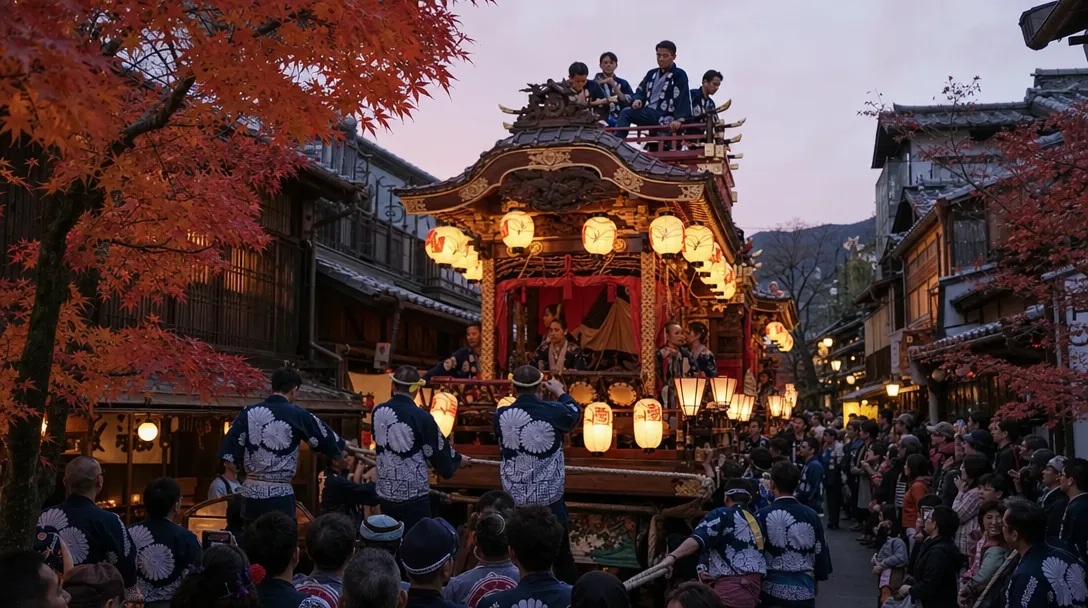
- Kishiwada’s floats don’t slow down at corners. Kishiwada City describes its danjiri as weighing more than four tons. At each corner the team turns it through a right angle at running speed, with the rear lever crew steering on a signal from the daiku-kata. Other float festivals slow down to turn; this turn (yarimawashi) is why the crowds come.
- Takayama’s puppets are a rare survival. The Japan Tourism Agency’s commentary explains that in the 1700s and 1800s most Takayama floats carried a karakuri puppet, but fires and other losses mean only 4 of today’s 23 floats have one. In autumn it is the Hotei-tai float, whose puppets are worked by a team hidden inside the float.
- Nagasaki’s line-up changes every year. Each neighbourhood (odori-cho) gets its turn to perform only once every seven years, so the 2026 programme of six neighbourhoods, including a dragon dance, won’t come back in the same form next year.
Autumn festival calendar: September to November
| Festival | Where | Rule (every year) | 2026 | 2027 (by the rule) | Tickets? |
|---|---|---|---|---|---|
| Kishiwada Danjiri | Kishiwada, Osaka | Sat–Sun before Respect for the Aged Day | 19–20 Sept | about 18–19 Sept | Free on the street; private seats sold |
| Nagasaki Kunchi | Nagasaki | 7–9 October | 7–9 Oct | 7–9 Oct (Thu–Sat) | Paid venues + free Nagasaka by lottery |
| Takayama Autumn Festival | Takayama, Gifu | 9–10 October | 9–10 Oct | 9–10 Oct (Sat–Sun) | Free |
| Kawagoe Matsuri | Kawagoe, Saitama | 3rd Saturday and Sunday of October | 17–18 Oct | about 16–17 Oct | Free |
| Jidai Matsuri | Kyoto | 22 October (rain: 23rd) | 22 Oct (Thu) | 22 Oct (Fri) | Free on the street; paid seats |
| Kurama Fire Festival | Kurama, Kyoto | 22 October, evening | 22 Oct (Thu) | 22 Oct (Fri) | Free; limited trains |
| Karatsu Kunchi | Karatsu, Saga | 2–4 November | 2–4 Nov (Mon–Wed) | 2–4 Nov (Tue–Thu) | Free; no paid seats |
The 2027 column is worked out from each festival’s fixed rule (Kawagoe uses 14–15 October instead when those dates fall on a weekend). Organisers publish their programmes closer to the date.
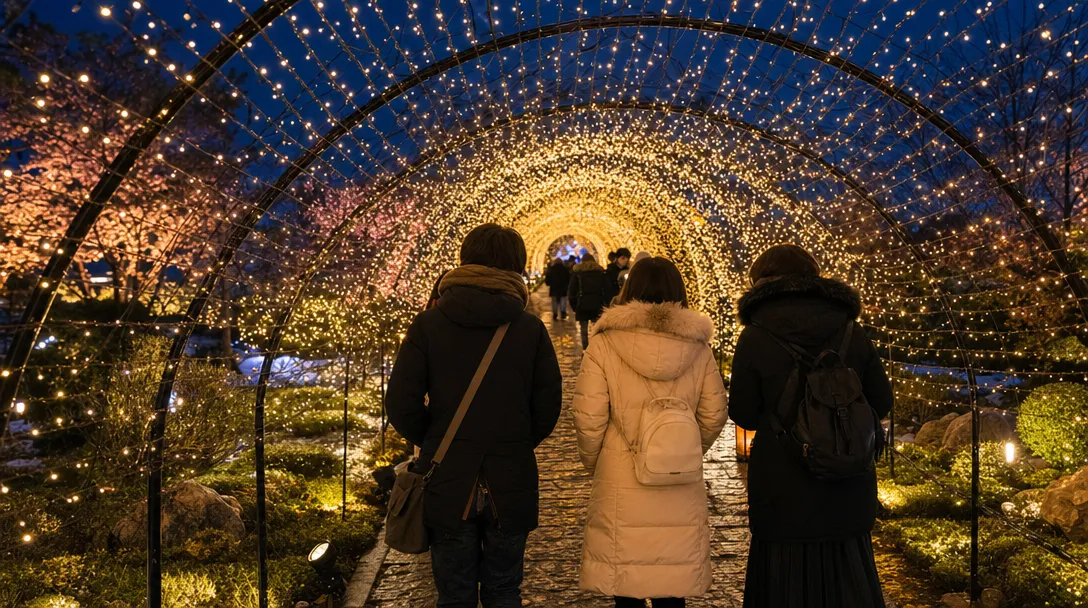 Related guidesJapan Winter Illuminations 2026–27: Dates, Prices and the Best Light Shows
September and early October: Kishiwada and Nagasaki
Kishiwada Danjiri Matsuri (Osaka). Kishiwada City’s 2026 schedule had test runs on earlier days and a second festival, in other districts, on 10–11 October 2026. Read the city’s spectator rules before you go: no umbrellas (bring a rain poncho), no stepladders or stools, no smoking, and leave space, because a danjiri’s rear tiller needs about twice the float’s width to steer. The city suggests Takojizo or Izumi-Ōmiya station rather than crowded Kishiwada Station. In 2026 a private company sold reserved seats near the main corner.
Nagasaki Kunchi (7–9 October). The festival of Suwa Shrine goes back to 1634, and the official site notes that many of its dances have an exotic, foreign-inspired flavour. There are four paid venues, each run separately; in 2026 the Central Park venue sold seats at ¥4,500–¥7,000 (about $28–$44) through Ticket PIA and 7-Eleven from 3 August, with no refunds for cancellations.
The Nagasaka steps: free, but by postcard lottery. The steps in front of Suwa Shrine are free seats, but you need a Nagasaka ticket (Nagasaka seiriken). For 2026, applications were by postcard only, from 1 to 21 July: one postcard per person per session (morning of the 7th, evening of the 7th, or morning of the 9th), for 1 or 2 tickets. The draw was held at the shrine on 26 July, and winners were told by postcard. If you can’t apply from Japan in July, a paid venue or the free street performances (niwasaki-mawari) after the shrine shows are the realistic options.
Mid-October: Takayama and Kawagoe
Takayama Autumn Festival (9–10 October). Eleven yatai floats, a national Important Tangible Folk Cultural Property, come out for Sakurayama Hachimangu shrine (in 2026 only 10 were shown, because the Gyojin-tai float was under repair). On the evening of the 9th the floats are pulled through town lit by lanterns. In 2026 the Hotei-tai karakuri performance was at 12:00 and 14:00 on the 9th and at 11:00 and 13:00 on the 10th. Takayama is small, so book a room as soon as your dates are fixed.
Kawagoe Matsuri (third weekend of October). Kawagoe’s festival goes back to 1648, and its float event is a national Important Intangible Folk Cultural Property. The highlight is hikkawase: when floats meet, the musicians on each face off and play against each other. Kawagoe is about 30 minutes from Ikebukuro by Tobu Tojo Line express, the easiest of the seven from Tokyo. Floats may not be pulled in bad weather. If you are staying in Tokyo for Kawagoe, autumn is also when Mt Fuji starts to show more often; here is how to plan a Mt Fuji day trip from Tokyo.
22 October in Kyoto: Jidai Matsuri by day, Kurama by night
Jidai Matsuri. About 2,000 people in costume walk in a procession covering roughly a thousand years of Kyoto’s history; it takes about two hours to pass. In 2026 the head of the procession reaches the Kyoto Gyoen seats around 12:00, Oike-dori around 13:20 and Jingu-michi around 14:20. Paid seats went on sale on 8 September 2026 (Ticket PIA or 7-Eleven): ¥5,000 (about $32) from the second row and ¥7,500 (about $47) in the front row, with an audio guide and guidebook. Only the Outenmon-mae special seats (¥13,500–¥15,500) have English commentary. If it rains, the procession moves to the 23rd and tickets stay valid, but there is no refund.
Kurama Fire Festival. On the evening of 22 October, local men carry heavy torches through Kurama village to Yuki Shrine (JNTO). The only train is the Eizan Railway, which runs a special timetable; in 2026 the last train from Kurama leaves at 23:24. Eizan Railway warns that boarding may be restricted, people may wait a long time without getting on, and trains to Kurama may stop if the police advise it. Go early, and if crowds worry you, the Jidai Matsuri that afternoon is the calmer choice. A room in Kyoto city is far easier to find than one near Kurama. The same line is worth a second trip a few weeks later: from 7 November to 6 December 2026 its trains slow down through a lit-up “Maple Tunnel” — see our Japan autumn leaves forecast for dates and the best weeks for Kyoto.
Early November: Karatsu Kunchi (Saga)
Karatsu Kunchi, the festival of Karatsu Shrine, runs every year on 2–4 November with 14 hikiyama floats, from the red lion of Katanamachi (No. 1) to the Shippomaru ship of Enokawamachi (No. 14). The eve parade starts at 19:00 on the 2nd, and on the 3rd the floats are pulled into and out of the Nishinohama Otabisho. The Karatsu tourism association says there are no paid seats and asks visitors to use public transport. The festival has been a national Important Intangible Folk Cultural Property since 1980.
How to plan
- Pick by date first. If you are in Japan now, Kyoto on 22 October and Karatsu on 2–4 November are the ones you can still catch this year.
- Book the room before anything else. Stay in Kyoto for Jidai and Kurama, Osaka for Kishiwada and Tokyo for Kawagoe; Takayama and Karatsu need a room in town.
- Bring cash and comfortable shoes. Food stalls often take cash only, and you will stand for hours. (If the takoyaki and shaved ice win you over, here is how to make Japanese festival food at home.)
Check the long weekends in our Japan public holidays 2027 list, read our shrine and temple etiquette guide before visiting Suwa or Yuki Shrine, and see the Japan seasonal events calendar for other months. Planning a summer trip instead? August’s big one is Awa Odori, where you can join the dance for free.