 Eastbound Finds
Hana here: in this article you get all 17 Japanese public holidays of 2027 with their weekdays, what Japanese people actually do on each one, and the few dates that change how you travel (reserved-only Nozomi trains, bank and museum closures). Checked against the Cabinet Office list and the other official sources below on 20 October 2026.
Key points
- Japan has 17 public holidays in 2027, including a substitute holiday on Monday 22 March, according to the Cabinet Office list (checked 20 October 2026).
- Golden Week 2027 is Showa Day on Thursday 29 April, then five days off in a row from Saturday 1 May to Wednesday 5 May.
- There is no five-day Silver Week in 2027: 18–20 September is a three-day weekend and Autumnal Equinox Day falls on Thursday 23 September.
Show more
- Banks close on public holidays and from 31 December to 3 January, and government offices from 29 December to 3 January.
- Every Nozomi shinkansen is reserved-only on 9–11 January and 20–22 March 2027 (and 25 December 2026–5 January 2027), so book a seat; tickets go on sale one month ahead at 10:00.
What each 2027 holiday is for
Japan’s holiday law gives every holiday a one-line purpose, and several are more interesting than their English names suggest.
AdvertisingQuick pick: Hotels in Tokyo – Trip.com
 Mikan's note: If your dates touch Golden Week (29 April–5 May) or New Year (29 December–3 January), book your hotel and shinkansen as soon as your flights are fixed, and change money before 31 December: bank counters stay shut until 4 January.
| Date | Day | Holiday | What it means and how Japan spends it |
|---|---|---|---|
| 1 Jan | Fri | New Year’s Day | The biggest family holiday of the year; banks and offices are already closed |
| 11 Jan | Mon | Coming of Age Day | Towns hold ceremonies for young adults (see below) |
| 11 Feb | Thu | National Foundation Day | Commemorates the founding of the nation |
| 23 Feb | Tue | Emperor’s Birthday | Public greeting at the Imperial Palace |
| 21 Mar | Sun | Vernal Equinox Day | Officially “praise nature and cherish living things” |
| 22 Mar | Mon | Substitute holiday | Because 21 March is a Sunday |
| 29 Apr | Thu | Showa Day | Reflect on the Showa era (1926–1989); start of Golden Week |
| 3 May | Mon | Constitution Memorial Day | The 1947 constitution came into force |
| 4 May | Tue | Greenery Day | Enjoy nature and be grateful for it |
| 5 May | Wed | Children’s Day | Children’s happiness — and, by law, thanking mothers |
| 19 Jul | Mon | Marine Day | Gratitude to the sea for a maritime nation |
| 11 Aug | Wed | Mountain Day | Japan’s newest holiday (since 2016) |
| 20 Sep | Mon | Respect for the Aged Day | Honour older people and celebrate long life |
| 23 Sep | Thu | Autumnal Equinox Day | “Revere ancestors and remember the departed” |
| 11 Oct | Mon | Sports Day | Enjoy sport and a healthy society |
| 3 Nov | Wed | Culture Day | “Love freedom and peace, promote culture” |
| 23 Nov | Tue | Labour Thanksgiving Day | Respect work and thank one another |
A few stories behind the list:
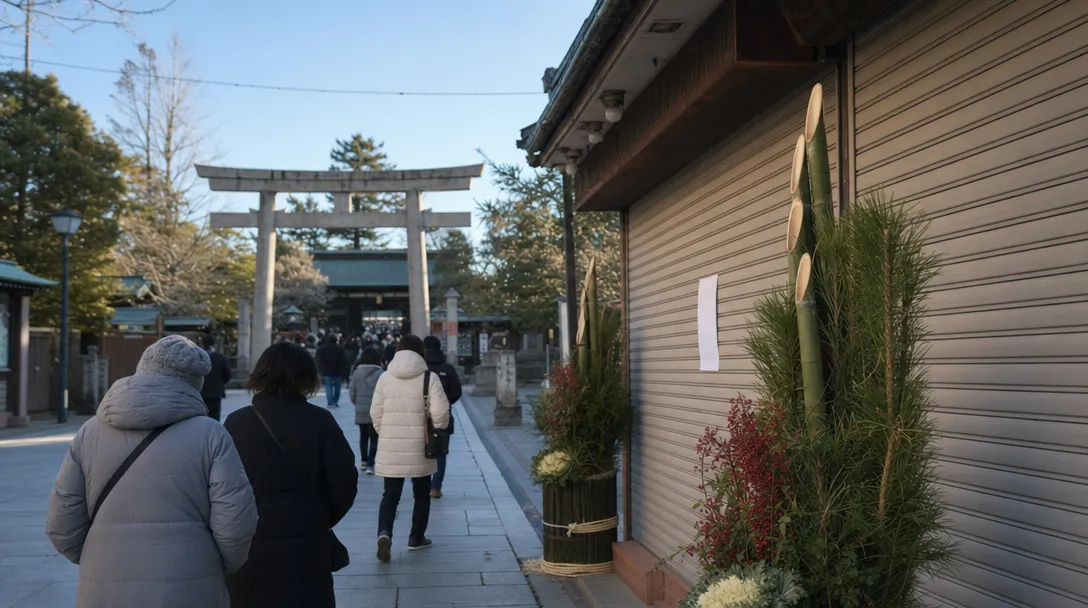
- Coming of Age Day. Japan lowered the legal age of adulthood from 20 to 18 in April 2022, but the Ministry of Justice notes there is no law fixing the ceremony, and most towns still invite 20-year-olds in January around this Monday. That is why you see young people in formal kimono and suits near city halls on the second weekend of January.
- Emperor’s Birthday. It moved from 23 December to 23 February with the change of emperor; the first 23 February holiday was in 2020, says the National Astronomical Observatory. On that day the Imperial Household Agency holds a free public greeting at the Imperial Palace: in 2026 the Emperor and the family appeared on the palace balcony three times in the morning and 26,973 people came. Entry is through a bag check, the agency asks visitors to leave suitcases and large bags in coin lockers, and not to bring even small knives or scissors. A similar greeting is held on 2 January for New Year.
- Mountain Day. Parliament added 11 August in 2014 and it took effect on 1 January 2016, so it sits in the middle of Obon, the mid-August period when many people travel to their home towns (Obon itself is not a public holiday).
- The equinox days move from year to year because they follow the astronomical equinox; the National Astronomical Observatory publishes the dates in advance. The autumn one’s official purpose is to revere ancestors and remember the dead.
Long weekends in 2027 — and why there is no Silver Week
| Period | Days off | What it means for travellers |
|---|---|---|
| 1–3 January (Fri–Sun) | New Year | Banks closed 31 Dec–3 Jan, government offices 29 Dec–3 Jan |
| 9–11 January | Sat–Mon | Nozomi trains reserved-only; coming-of-age ceremonies |
| 20–22 March | Sat–Mon | Nozomi trains reserved-only; close to cherry blossom time |
| 29 April, 1–5 May | Golden Week | The busiest travel week of spring |
| 17–19 July | Sat–Mon | Start of the summer holiday season |
| Around 11 August | Mountain Day and Obon | Obon is not a public holiday, but many people travel home |
| 18–20 September | Sat–Mon | Three-day weekend; Thursday 23 September is also off |
| 9–11 October | Sat–Mon | Autumn leaves start in the north (when they reach each city) |
Japanese media call a five-day autumn run “Silver Week”. It happens only when a single weekday is squeezed between Respect for the Aged Day and Autumnal Equinox Day, because the law turns such a sandwiched day into a holiday — that is what made 19–23 September 2026 a five-day break. In 2027 there are two working days (21 and 22 September) in between, so you only get a normal long weekend.
 Related guidesGoshuin Stamps in Japan: How to Ask, Costs and Where to Buy a Goshuincho
What closes and what gets crowded
- Museums. Many close on Mondays but stay open on holiday Mondays. The Tokyo National Museum opens on a Monday holiday and closes on the next weekday instead — so on 11 January it is open and on Tuesday 12 January it is closed. Over New Year it closes 26–31 December 2026 and reopens on 1 January 2027 (12:00–20:00).
- Banks. The Banking Act’s enforcement order makes public holidays, Saturdays and 31 December–3 January bank holidays. If you need a bank counter (for example to exchange money), do it before 31 December.
- Shinkansen. JR Central and JR West run every Nozomi on the Tokyo–Osaka–Hakata line with reserved seats only at peak times: 25 December 2026–5 January 2027, 9–11 January and 20–22 March 2027. During those dates a non-reserved ticket does not get you a seat on a Nozomi; Hikari and Kodama keep non-reserved cars. In 2026 the same rule also covered Golden Week, Obon and the September holidays; the dates for April 2027 onwards had not been announced on 20 October 2026.
- When to book. JR reserved seats go on sale one month before the travel date at 10:00 Japan time, so seats for 1 May 2027 open on 1 April at 10:00.
Matching Japan’s calendar with yours
If you are travelling from the UK, Easter 2027 is early: Good Friday is 26 March and Easter Monday 29 March (GOV.UK). That week follows Japan’s 20–22 March long weekend, and Tokyo’s average cherry blossom date is 24 March (Japan Meteorological Agency, 1991–2020 average; in 2026 the trees opened on 19 March). Expect high demand for flights and hotels in late March from both sides. The UK early May bank holiday is Monday 3 May 2027 — the same day as Japan’s Constitution Memorial Day — so a May Day trip lands right in Golden Week. For quieter travel, look at late January, June or November weekdays.
How to use the dates
- Want quieter trains and cheaper rooms? Avoid 29 April–5 May, mid-August and 29 December–3 January.
- Coming for cherry blossoms? Book as soon as your flights are fixed if you are there around 20–22 March.
- Want to see a holiday, not just avoid it? The palace greetings on 2 January and 23 February, and the January coming-of-age weekend, are free to watch.
Planning what to do while you are there? See our Japan seasonal events calendar, what happens over New Year and the fukubukuro sales, and our guide to Tokyo food tours. Coming in autumn? See when the big autumn festivals in Japan happen.