 Eastbound Finds
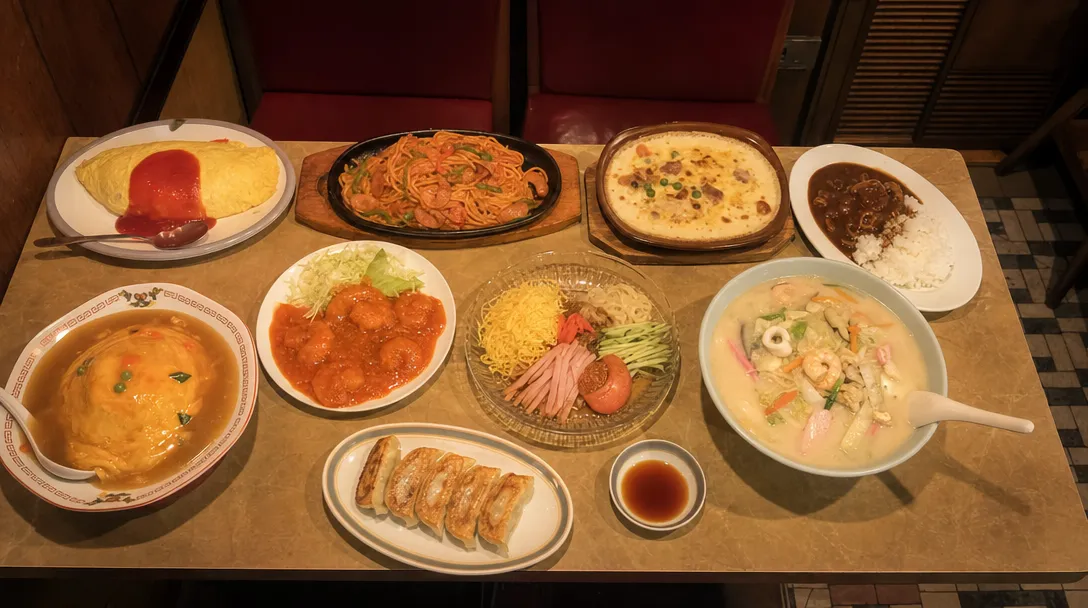
Hana here. Order “napolitan” in Japan and you get spaghetti fried with ketchup, onion and sausage, a dish no one in Naples would recognise. This guide explains what yoshoku (Japan’s Western food) and machi-chuka (Japan’s neighbourhood Chinese food) mean, which restaurants say they created omurice, napolitan, doria and champon, where you can still eat the originals, and what to check in the sauces if you cook them at home.
Key points
- Yoshoku means Western-style dishes that were remade for Japanese tastes and rice, such as omurice, napolitan, doria, hayashi rice and katsu.
- Machi-chuka is the neighbourhood 'Chinese' food of Japan, such as tenshinhan, ebi chili, hiyashi chuka, champon and pan-fried gyoza, and much of it is not eaten the same way in China.
- Hotel New Grand in Yokohama says doria and napolitan were created in its kitchen, and its restaurant The Café still serves them: seafood doria 3,289 yen and napolitan 2,340 yen on its menu (checked 19 Oct 2026).
Show more
- Hokkyokusei in Osaka says it created omurice in 1925, and Shikairo in Nagasaki says its founder Chen Pingshun created champon when he opened in 1899.
- Japanese hayashi rice sauce often contains beef and pork fat; House Foods lists both in its ripe tomato hayashi sauce, so it is not vegetarian or halal.
Yoshoku and machi-chuka in one sentence each
Yoshoku is Western cooking rebuilt around a bowl of rice: an omelette wrapped around ketchup rice, beef in demi-glace poured over rice, a gratin baked on top of rice. Machi-chuka, literally “town Chinese”, is the cheap family-run Chinese restaurant on every Japanese shopping street, with a menu that grew up in Japan rather than in China.
AdvertisingQuick pick: Tokyo food tours and tastings – GetYourGuide
 Mikan's note: Japanese hayashi and demi-glace sauces often contain beef and pork fat, so check the ingredients on the box if you avoid pork or meat.
Both are everyday food. You find them at old diners called yoshoku-ya, at coffee shops (kissaten), in department store restaurants and at local ramen-and-gyoza counters, not at fancy restaurants.
The family tree of the dishes
| Dish | What it is | Started from | Origin claim (official source) |
|---|---|---|---|
| Omurice | Omelette over chicken rice with ketchup | French omelette | Hokkyokusei, Osaka, 1925 |
| Napolitan | Spaghetti fried with ketchup | American soldiers’ spaghetti with ketchup | Hotel New Grand, Yokohama, after the war |
| Doria | Rice baked under white sauce and cheese | French gratin | Hotel New Grand, Yokohama, by chef Saly Weil |
| Hayashi rice | Beef and onion in demi-glace on rice | Western beef stew | Said to be Maruzen founder Hayashi Yuteki (the company itself says there are several theories) |
| Champon | Noodles in pork and chicken broth with seafood and vegetables | Fujian home cooking | Shikairo, Nagasaki, 1899 |
| Tenshinhan | Crab omelette on rice with thick sauce | Chinese egg dishes | No first-hand record |
| Ebi chili | Prawns in a sweet chilli tomato sauce | Sichuan prawn dish | Popularly linked to chef Chen Kenmin (not stated on his restaurant’s history page) |
| Hiyashi chuka | Cold ramen noodles with toppings | Chinese-style noodles | Sendai and Tokyo both claim it; no official record found |
| Yaki gyoza | Pan-fried dumplings | Chinese boiled dumplings | Eaten everywhere; Hamamatsu and Utsunomiya compete for the top spot |
 Related guidesTokyo Food Tours: Which One to Book (Shinjuku, Tsukiji, Tuna Auction)
The stories the restaurants tell themselves
Doria and napolitan, Hotel New Grand (Yokohama). The hotel says its first head chef, Saly Weil, who was invited when the hotel opened in 1927, made doria on the spot for a foreign guest who was feeling unwell. Napolitan came later: the hotel says its second head chef, Irie Shigetada, saw American soldiers during the occupation eating spaghetti mixed with ketchup and improved it into the dish served today. The hotel’s own version is made with a sauce of tomatoes, garlic and onion cooked until golden, not just ketchup. Both dishes then spread to coffee shops all over Japan, where napolitan is often served sizzling on an iron plate.
Omurice, Hokkyokusei (Osaka). The restaurant says that in 1925 its former owner, Kitahashi Shigeo, wrapped ketchup rice in a thin omelette for a regular customer with a weak stomach. Other restaurants also claim early versions, so this is the claim with the clearest official account rather than a settled fact.
Hayashi rice, Maruzen. The bookshop company Maruzen says hayashi rice is said to have been created by its founder, Hayashi Yuteki, and adds that there are several theories. Today Japanese supermarkets sell hayashi sauce in blocks, like Japanese curry roux.
Champon, Shikairo (Nagasaki). Shikairo says its founder, Chen Pingshun, who came from Fujian, opened the restaurant in 1899 and that he created champon. The restaurant still serves it.
Ebi chili and tenshinhan. Shisen Hanten’s official history says Chen Kenmin came to Japan in 1952 and opened the restaurant in 1958. He is widely credited with adapting Sichuan dishes such as ebi chili for Japanese tastes, but the restaurant’s history page does not tell that story, so treat it as the popular account. For tenshinhan there is no first-hand record at all.
Gyoza. In Japan, gyoza almost always means pan-fried dumplings with a crisp base. Hamamatsu City reports that in the government’s Family Income and Expenditure Survey for 2025, Hamamatsu households spent 4,046 yen on gyoza, ahead of Utsunomiya (3,575 yen) and Miyazaki (3,418 yen). That figure counts fresh gyoza bought to cook or take home, not frozen gyoza or restaurant meals.
Where to eat the originals
| Place | What to order | Price and hours (checked 19 Oct 2026) |
|---|---|---|
| The Café, Hotel New Grand, Yokohama | Doria, napolitan | Seafood doria 3,289 yen, napolitan 2,340 yen (menu prices). Open 10:00–21:30, last orders 21:00. Reservations accepted |
| Shikairo, Nagasaki | Champon | Lunch 11:30–15:00 (last entry 14:00), dinner 17:00–20:00 (last entry 19:00). Closed about two Wednesdays a month, so check the calendar on the official site |
| Hokkyokusei, Osaka | Omurice | Check the official site for branches and hours |
Rengatei in Ginza, Tokyo, is another old yoshoku restaurant. Its signature dish is listed on the menu as the “original pork cutlet” (ganso pōku katsuretsu), and it is often described as the starting point of tonkatsu and of yoshoku itself. We could not find an official website that confirms the history, so read it as the restaurant’s own story. The cutlet still comes the old way: shredded cabbage on one plate and rice on another.
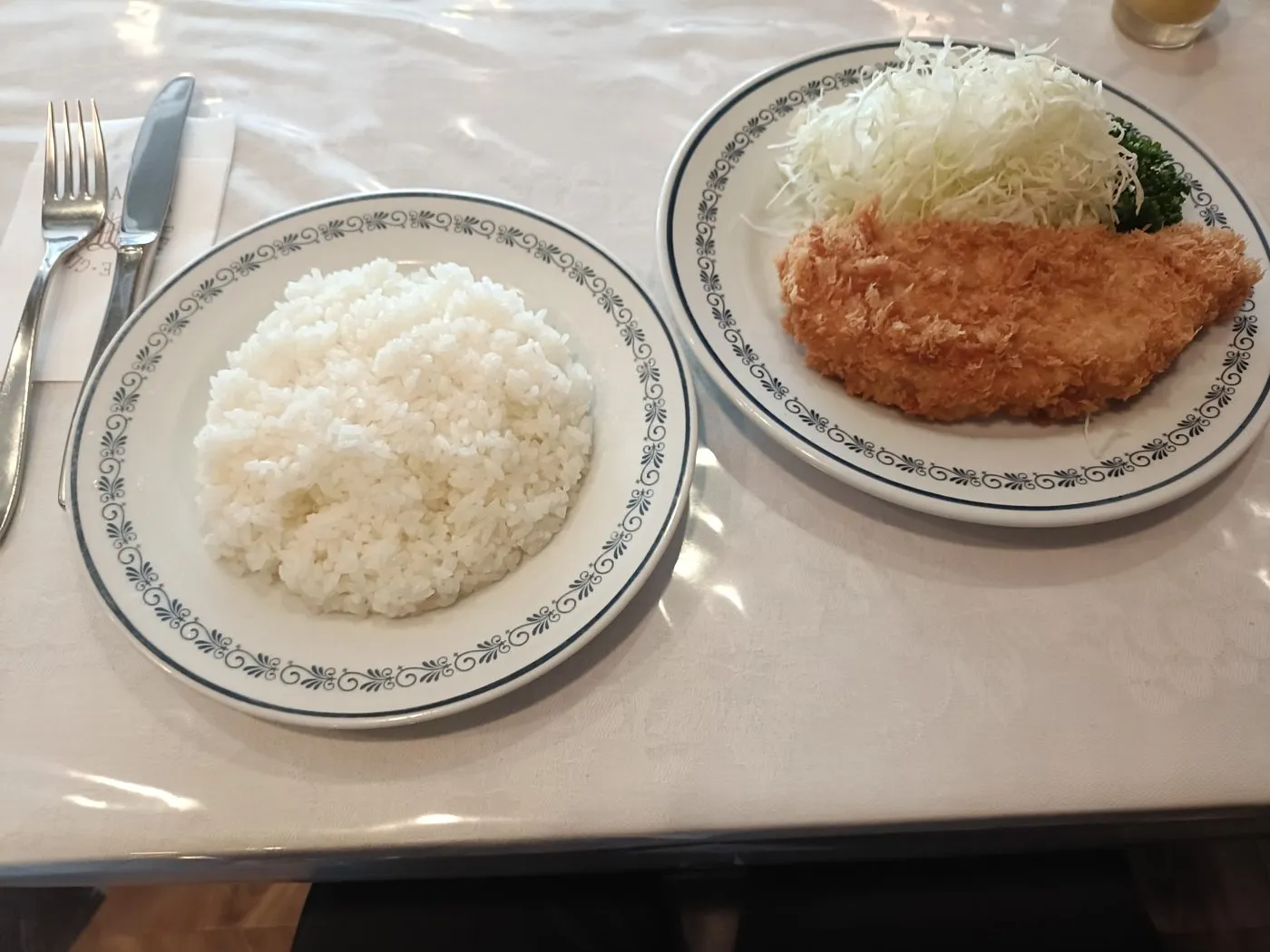
The original pork cutlet at Rengatei in Ginza.
We ate there ourselves on a weekday at lunchtime in October 2026. The coating was light and crisp, and the pork inside was soft and tender. We walked straight in without queuing.
Because The Café takes reservations, it is easy to fit into a day trip from Tokyo to Yokohama. If you would rather have a guide take you to old diners and gyoza counters, a Tokyo food tour usually includes this kind of everyday food.
Cooking yoshoku at home: what is in the bottles
Most yoshoku at home relies on three Japanese products:
- Bull-Dog sauce. Bull-Dog explains that its Worcester, chuno and tonkatsu sauces differ mainly in thickness: Worcester is thin, chuno is in between, tonkatsu sauce is thick for fried cutlets. Thick tonkatsu sauce is the one for katsu and korokke (croquettes).
- Kewpie mayonnaise. Kewpie says its mayonnaise, launched in 1925, is made with egg yolk only, with vegetable oil and vinegar as the main ingredients. That is why it tastes richer than many Western mayonnaises.
- Hayashi sauce blocks. House Foods lists beef fat and pork fat in its ripe tomato hayashi rice sauce, and even its version without the eight main allergens contains pork extract. Check the label if you avoid pork or meat.
Omurice and napolitan need nothing special: ketchup, onion, chicken or sausage and eggs. If you liked this, the guide to Japanese festival food at home covers takoyaki and taiyaki.
Before you go
Old yoshoku-ya and machi-chuka restaurants can be small, may not take cards and often close one day a week. Many have picture menus or plastic food models in the window. Pointing at the window works. Prices in this guide were checked on 19 October 2026 and can change, so look at the official site before a special trip.