 Eastbound Finds
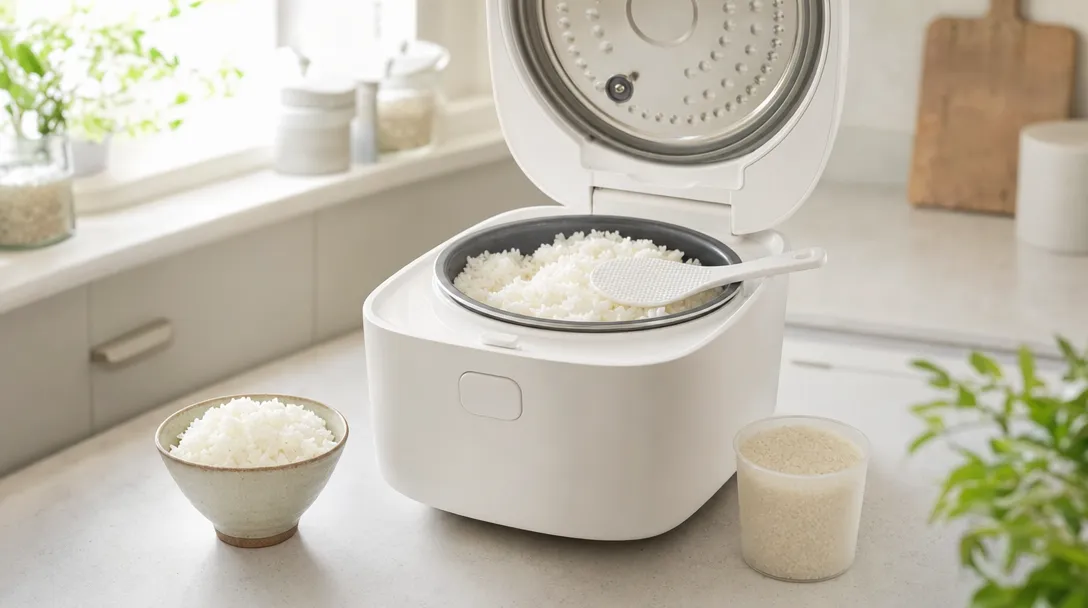
A good Japanese rice cooker in the US is usually one that Japanese brands build for the US: 120V, English panel, and a US warranty. This guide explains the three heating types (micom, IH and pressure IH), what “5.5 cups” really means, and when carrying a cooker home from a Japanese electronics store stops making sense. Checked on 12 October 2026.
Key points
- For most US homes, a Japanese-brand rice cooker made for the US market (120V) is the safer buy; Japan-market models run on 100V and their makers say they are not for use outside Japan.
- Micom cookers are controlled by a microchip, IH cookers heat the inner pan by induction, and pressure IH adds pressure; Zojirushi's US 5.5-cup models draw 680 W, 1,230 W and 1,240 W respectively.
- Capacity is counted in Japanese rice cups of about 180 mL (one go), not 240 mL US cups, so a 5.5-cup cooker holds about 1.0 liter of raw rice and a 10-cup cooker about 1.8 liters.
Show more
- Zojirushi America says voltage converters and plug adapters are not recommended, and its repairs, parts and warranty apply only in the US and Canada.
- From 1 November 2026 Japan's tax-free shopping becomes a refund at departure: you pay the full price in the shop and get the consumption tax back after customs checks the item at the airport.
Quick decision: buy in the US or carry one home from Japan?
| Your situation | What makes sense | Why |
|---|---|---|
| You live in the US and want a cooker for daily use | A US-market model (120V) from a US retailer | Matches US outlets; Zojirushi America’s repairs, parts and warranty apply in the US and Canada |
| You want a specific Japan-only model you saw in a Japanese store | Think twice | It runs on 100V, its panel and manual are usually in Japanese, and Japanese makers say there is no service outside Japan |
| You are moving to Japan for a few years | Buy a Japanese model there | 100V is the local standard, so it works as designed while you live there |
| You cook rice for one and want to keep costs down | A small micom model | IH and pressure IH cost more and use more power |
When buying in Japan is the wrong call: if you would need a step-down transformer to run it, if you cannot read the Japanese buttons and menus, or if a repair would matter to you. For most US buyers, at least one of these is true.
AdvertisingQuick pick: Zojirushi NS-ZCC10 Neuro Fuzzy rice cooker, 5.5-cup, 120V – Amazon.com
Micom, IH or pressure IH – what is the difference?
All three are made by the major Japanese brands. The figures below are from Zojirushi’s own US product pages for the 5.5-cup size (checked 12 October 2026).
| Type | How it heats | Example (US model) | Power at 120V | Good for |
|---|---|---|---|---|
| Micom (fuzzy logic) | A heater under the pan; a microchip controls temperature and time | Zojirushi NS-ZCC10 | 680 W | Everyday white and brown rice, smaller budgets |
| IH (induction heating) | The inner pan itself is heated by induction, rather than only from a plate underneath | Zojirushi NP-HCC10 | 1,230 W | More even cooking, larger batches |
| Pressure IH | Induction heating plus pressure | Zojirushi NW-YNC10 | 1,240 W | Softer, stickier Japanese-style rice; kitchens at altitude (up to 5,000 ft) |
Zojirushi’s FAQ explains that “micom” means micro-computerized and that it recommends pressure IH for the best results. It also says all its cookers are tested to work up to 5,000 feet above sea level, and that below that height pressure models cook rice better than non-pressure ones; pressure cookers are not designed for use above 5,000 feet.
The wattage gap matters later: IH and pressure IH cookers draw roughly twice the power of a micom cooker of the same size.
 Related guidesGolden Curry vs Vermont Curry vs Java: Only One Lists No Meat Extract or Milk
What “3 cups”, “5.5 cups” and “10 cups” mean
Japanese cookers are sized in go (合), the traditional rice measure of about 180 mL. US-market cookers call this a “cup”, but it is not a US measuring cup.
| Size on the box | Raw rice (approx.) | Typical household |
|---|---|---|
| 3 cups (3 go) | about 0.54 L | 1–2 people |
| 5.5 cups (5.5 go, “1.0 L” class) | about 1.0 L | 2–4 people |
| 10 cups (1 shō, “1.8 L” class) | about 1.8 L | 4 or more, or batch cooking |
- One rice cup is about 180 mL (about 6 fl oz), or roughly ¾ of a 240 mL US cup, according to Zojirushi’s FAQ.
- Capacity is measured with raw short-grain white rice; other grains may fill less.
- If you scoop rice with a US cup and fill water to the line, you get too much rice for the water. Use the cup in the box.
Jasmine, basmati and other long-grain rice
Japanese cookers are tuned for short- and medium-grain rice, but US-market models often add other menus. Zojirushi’s NP-HCC10 lists a jasmine white rice setting, and the NW-YNC10 lists Jasmine and Quick Jasmine. For models without one, Zojirushi’s FAQ suggests about 1¼ cups of water per cup of long-grain white rice on the Mixed setting. It does not give a separate basmati setting, so start with a small batch and adjust.
Buying a rice cooker in Japan: voltage, plugs and tax-free
Japan’s household power is 100V, at 50 Hz in the east and 60 Hz in the west, according to the Japan National Tourism Organization, and outlets take two flat pins (Type A, plus Type B with a ground pin, in the IEC’s plug list). The plug shape looks like a US plug, which is exactly why this is easy to get wrong: the plug fits, but the voltage is not the same.
- Read the rating label. A Japan-market cooker says “AC 100V”. The Panasonic SR-HX/SR-HB manual, for example, states that the cooker is designed for use in Japan, cannot be used in countries with a different voltage or frequency, and has no after-sales service abroad.
- Transformers are not a simple fix. Zojirushi America says voltage converters and plug adapters are not recommended. A transformer must handle the cooker’s full power: Japanese IH models in the Panasonic manual are rated at about 1,200–1,400 W, far beyond a small travel converter. A transformer also does not change frequency.
- Warranty. Zojirushi America’s FAQ says repairs, parts and warranty coverage apply only within the US and Canada. A Japan-market unit is outside that.
- Some “Japan import” listings are 100V models. On US marketplaces you can find Japan-market cookers listed with sizes in “go”. Check the specifications for “120V” before you buy.
Tax-free shopping changes on 1 November 2026
If you still buy a cooker (or anything else) in Japan as a visitor, the tax-free system is changing:
- Until 31 October 2026: the current system, where tax-free shops deduct the tax at the counter.
- From 1 November 2026: you pay the full tax-inclusive price, then complete customs confirmation at a terminal in the departure lobby before you check in your bags, within 90 days of purchase, to get the consumption tax back. Purchases must be at least 5,000 yen (before tax) per shop per day, and you must be able to show the item to customs. (Japan National Tourism Organization and National Tax Agency, checked 12 October 2026.)
A rice cooker in its box is bulky, so keep it reachable until you have done the customs step.
Who a Japanese-brand rice cooker does not suit
- People who cook rice once a month – a pot on the stove is enough.
- People who mostly cook long-grain rice and want it fluffy and separate, if the model has no long-grain or jasmine menu.
- Small kitchens with one weak circuit: an IH or pressure IH cooker at 1,200 W or more shares the circuit with a kettle or microwave.
Next step
- Decide the size from the table above (most couples are fine with 5.5 cups).
- Pick micom, IH or pressure IH by budget and how often you cook.
- Buy a 120V US-market model and register it with the maker; check the rating label when it arrives.
If you are also looking at Japanese kitchen tools, see our guide to Japanese knives, and for sending Japanese items as gifts, Japanese gifts online.
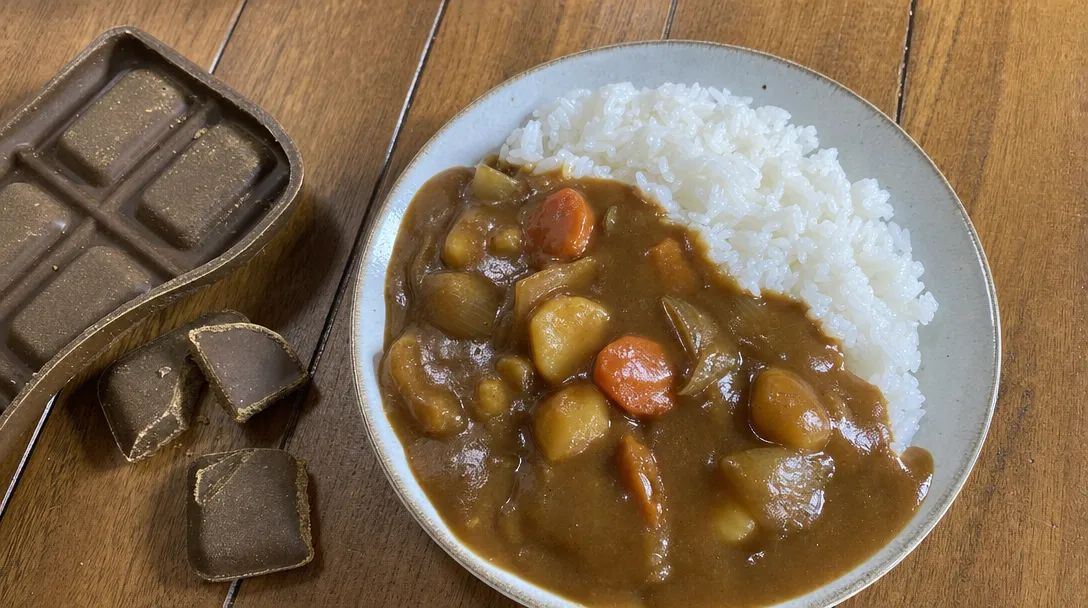
Once the rice is ready, the most common thing Japanese homes pour over it is curry made from a roux block: our guide to Japanese curry roux compares Golden Curry, Vermont and Java.
Read next: Japanese Bidet Toilet Seat in the US: Bring One From Japan or Buy 120V?