 Eastbound Finds
Seibuen Amusement Park, 42 minutes from Ikebukuro, has rebuilt a whole shopping street as it looked in 1960, and its “residents” break into song and dance. Hana here: that street and five more places where Tokyo still looks like the 1950s and 60s are compared below, with prices, hours and trains checked on official sites on 3 November 2026.
Key points
- For the full Showa experience, go to Seibuen Amusement Park's Yuhi no Oka shopping street, a recreated 1960 town whose 'residents' sing and dance; the 1-day ticket is ¥4,900 for adults and the park is 42 minutes from Ikebukuro.
- The cheapest retro stop is the Shin-Yokohama Raumen Museum: ¥450 gets you into a recreated 1958 streetscape lined with ramen shops, 5 minutes on foot from JR Shin-Yokohama Station.
- Shibamata's temple lane, the setting of the Tora-san films, became Tokyo's first Important Cultural Landscape in 2018, and Yanaka Ginza is a free, roughly 170 m shopping street from about 1945.
Show more
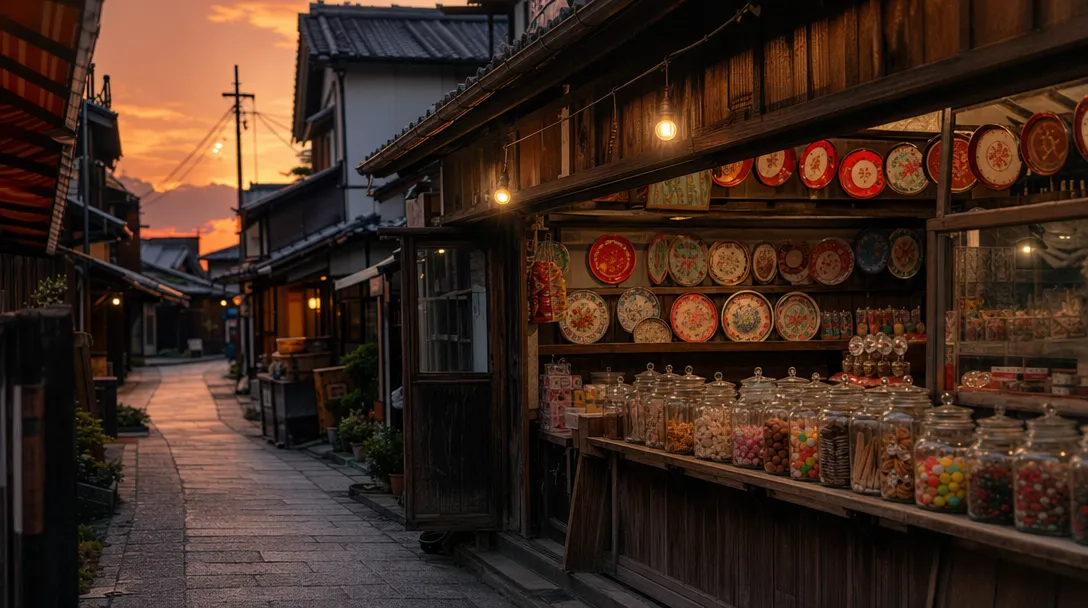
- Kawagoe's warehouse streets are Meiji-era, not Showa; the retro part is Kashiya Yokocho, an alley of about 30 old-fashioned sweet shops, about 30 minutes from Ikebukuro by express.
- Check closing days before you go: Seibuen closes on 18 and 25 November 2026, the Raumen Museum on 31 December and 1 January, and the Edo-Tokyo Open Air Architectural Museum every Monday.
Fans of the film Always: Sunset on Third Street will recognise the mood, but none of these places is an official tie-in with the film.
6 retro places at a glance
| Place | What feels Showa | Entry (adult) | From central Tokyo | Booking / language |
|---|---|---|---|---|
| Seibuen Amusement Park, Yuhi no Oka street | Recreated 1960 shopping street with singing residents | ¥4,900 (1-day ticket with rides) | 42 min from Ikebukuro | Tickets online or at the gate; official English guide |
| Shin-Yokohama Raumen Museum | Recreated 1958 streetscape with ramen shops | ¥450 | Shinagawa → Shin-Yokohama by Shinkansen, then 5 min walk | No booking; official site in English and Thai |
| Shibamata Taishakuten lane | Wooden shops on Tora-san’s temple approach | Free (Tora-san Museum ¥500) | About 50 min from the Tokyo Station area | No booking; museum info in Japanese |
| Yanaka Ginza | Small shopping street from about 1945 | Free | 5 min walk from Nippori Station | No booking |
| Edo-Tokyo Open Air Architectural Museum | Moved 1920s shops and a 1929 bathhouse | ¥400 | JR Musashi-Koganei + 5 min bus + 5 min walk | No booking; official English pages |
| Kawagoe, Kashiya Yokocho | About 30 old-fashioned sweet shops | Free | About 30 min from Ikebukuro (express) | No booking |
The retro towns at Seibuen and Shin-Yokohama are re-creations; Shibamata, Yanaka and Kawagoe are real streets where people live and shop.
AdvertisingQuick pick: Tours and experiences in Tokyo – GetYourGuide
 Mikan's note: Seibuen's opening days for December 2026 were not out yet on 3 November – check the official calendar before you buy a ticket, and remember that 'Seibu-Yuenchi Station' is now called Tamako.
Seibuen Amusement Park: a 1960 street that sings
The park reopened after a full renewal on 19 May 2021, and its centrepiece is Yuhi no Oka shopping street (“Sunset Hill”), which the park describes as a recreation of a Showa town in 1960. Residents in costume lead a “Boogie-Woogie Festival” that visitors can join, and the street sells Showa-style food such as Napolitan spaghetti, dango and rice crackers. There is a candy shop, a coffee house, a diner and a fairground lane with ring toss and shooting games.
- Ticket: the 1-day “Leisure ticket” (entry plus unlimited rides) is ¥4,900 for adults, ¥4,200 for junior and senior high school students, ¥3,600 for primary pupils and ¥1,900 for children aged 3 and up. The price page does not list an entry-only ticket.
- Hours: in November 2026 the park is open 10:00–17:00 and closed on Wednesday 18 and Wednesday 25 November. December hours were not published yet on 3 November.
- The station name trap: the park’s station is Seibuen-yuenchi on the Yamaguchi Line (Leo Liner). On 13 March 2021 Seibu renamed the old “Seibu-Yuenchi” station to Tamako, so older guides point you to a station name that no longer exists. Tamako is about 11 minutes’ walk away.
- Free train pass: since 25 September 2026 the park gives visitors a free 1-day Leo Liner pass for the line between Tamako and Seibu-Kyujo-mae.
The food on the street is the same post-war Western-style cooking that you still find in old diners all over Japan; we explain where Napolitan and omurice came from in our guide to yoshoku.
 Related guidesWhat to Wear in Japan in November: Weather by City and Week (°C and °F)
Shin-Yokohama Raumen Museum: 1958 for ¥450
The museum opened on 6 March 1994 and recreates the streets of 1958, the year instant ramen was born, with ramen shops from around Japan behind the old shopfronts.
- Admission: ¥450 for adults, ¥100 for primary to high school students, free for pre-school children. Show your ticket at the 1st-floor desk if you want to go out and come back in.
- Hours: weekdays 11:00–21:00, weekends and holidays 10:30–21:00 (last orders 30 minutes before closing). Closed on 31 December and 1 January.
- Access: about 5 minutes on foot from JR Shin-Yokohama (Tokaido Shinkansen), or 1 minute from exit 10 of the subway and Sotetsu/Tokyu station. The museum’s Thai page says it is about 11 minutes from Shinagawa by Shinkansen.
Most payments inside can be cashless; cash is needed for the car park, the candy shop and vending machines. Not sure which bowl to order? Our guide to Japanese ramen types explains shoyu, miso, shio and tonkotsu.
Shibamata: Tora-san’s temple lane, a protected landscape
From Keisei Shibamata Station to the temple Taishakuten, a lane of about 200 m is lined with old wooden shops selling kusa-dango (mugwort rice dumplings) and rice crackers. GO TOKYO notes that it was the setting of the Otoko wa Tsurai yo (Tora-san) films, made from 1969 to 1995, and a statue of Tora-san stands in front of the station.
The area is more than a film set: on 13 February 2018 “the cultural landscape of Katsushika Shibamata” was chosen as a national Important Cultural Landscape, the first in Tokyo.
- Tora-san Museum: 9:00–17:00, ¥500 for adults (joint ticket with the Yoji Yamada Museum). Closed on the third Tuesday of each month and, in December, from Tuesday to Thursday of the third week; it is open over the New Year.
- Access: about 50 minutes from the Tokyo Station area (JR to Nishi-Nippori, Chiyoda Line to Kanamachi, Keisei Kanamachi Line to Shibamata), or about 60 minutes from Shinjuku via Nippori and Keisei Takasago, according to GO TOKYO.
Yanaka Ginza: a real 1940s shopping street
Yanaka Ginza grew up naturally around 1945, and today about 60 shops line its roughly 170 m. The official site describes the steps called Yuyake Dandan (“sunset steps”) at the top as a sunset spot where the view of the old downtown opens up suddenly.
It is 5 minutes on foot from Nippori Station (JR Yamanote Line and Keisei line) or Sendagi Station (Chiyoda Line), and there is no car park. If you are staying in Ueno or Asakusa, it is one of the easiest half-day walks.
Edo-Tokyo Open Air Architectural Museum: step inside 1920s shops
In Koganei Park in western Tokyo, real buildings have been moved and rebuilt. The museum’s East Zone is a street of early-Showa shops: Kodakara-yu, a 1929 public bathhouse with a temple-like curved gable and carvings of the Seven Lucky Gods and a 1927 flower shop with a decorated copper front, alongside dried-food, stationery and household goods stores.
- Admission: ¥400 for adults, ¥200 for 65 and over, free for junior high school students and younger.
- Hours: 9:30–16:30 from October to March, 9:30–17:30 from April to September (last entry 30 minutes before closing). Closed on Mondays (the next weekday if Monday is a holiday) and over the New Year.
- Access: from the north exit of JR Musashi-Koganei, Seibu bus (stops 2 and 3) about 5 minutes to “Koganei Koen Nishiguchi”, then 5 minutes on foot.
On 3 November 2026 the museum’s own website was temporarily offline for maintenance, so check the Tokyo Metropolitan Foundation for History and Culture page above for the latest details.
Kawagoe: the candy alley, not the warehouses
Kawagoe is often sold as “Little Edo”, and its famous warehouse-style shops (kurazukuri) were built after a great fire in 1893, so they are Meiji-era rather than Showa. For a Showa mood, go to Kashiya Yokocho, a stone-paved alley of about 30 shops selling old-fashioned sweets such as cinnamon and mint candy and karume-yaki (puffed brown sugar). In 2001 Japan’s Ministry of the Environment chose it as one of the “100 fragrant landscapes”.
- Access: according to Kawagoe City, the Tobu Tojo Line express from Ikebukuro takes about 30 minutes, and the Seibu Limited Express “Koedo” from Seibu-Shinjuku reaches Hon-Kawagoe in about 45 minutes.
Which one should you choose?
- One big retro day out with kids: Seibuen. Check the calendar first, especially in December.
- A cheap hour between other plans: the Raumen Museum, easy to combine with a Shinkansen trip.
- A real old neighbourhood: Shibamata or Yanaka, both free to walk.
- Old buildings you can walk into: the Edo-Tokyo Open Air Architectural Museum (not on Mondays).
- A day trip with sweets: Kawagoe, starting from Ikebukuro.
Many of these streets were built around one dish that still defines the Showa diner: ketchup-red Napolitan spaghetti. Why does Japan put ketchup on pasta and rice? The answer is in our guide to yoshoku, Japan’s Western-style food.