 Eastbound Finds
In Ginza there is a restaurant that has been frying pork cutlets since 1895. Rengatei is one of the oldest yoshoku restaurants in Tokyo. Yoshoku means Japanese-style Western food: dishes such as cutlets, omelette rice and hayashi rice that arrived from Europe in the late 1800s and became Japanese home cooking. This is one of the few pages on this site written from the site owner’s own visit, so the photo and the bill are real.
Key points
- Rengatei opened in Ginza in 1895 as a Western-style (yoshoku) restaurant. Its menu calls the house pork cutlet the 'original', and it is often told as a starting point of tonkatsu.
- We had lunch there on a weekday just after noon in October 2026. We went straight in, sat on the second floor, and paid about ¥3,000 for the pork cutlet and about ¥300 for a plate of rice.
- At that hour most diners were older regulars, people who simply like Ginza. We saw few tourists, and the old Western-house rooms felt like retro Japan.
Show more
- Lunch is 11:15–15:00 (last order 14:00) and dinner 17:30–21:00 (last order 20:00), Monday to Saturday and public holidays. It is closed on Sundays, at the end of August and over New Year.
- Some listings say cards are not accepted, so bring cash.
What we ate, and what it cost
We went for lunch on a weekday in October 2026, just after noon. The restaurant was not very crowded. We walked straight in without queuing and were taken upstairs to the second floor.
AdvertisingQuick pick: Hotels in Tokyo (Ginza, Tokyo Station, Shinjuku and more) – Trip.com
 Mikan's note: Rengatei is closed on Sundays, so plan a Ginza Sunday elsewhere. Some listings say cards are not accepted, so keep cash on you before you sit down.
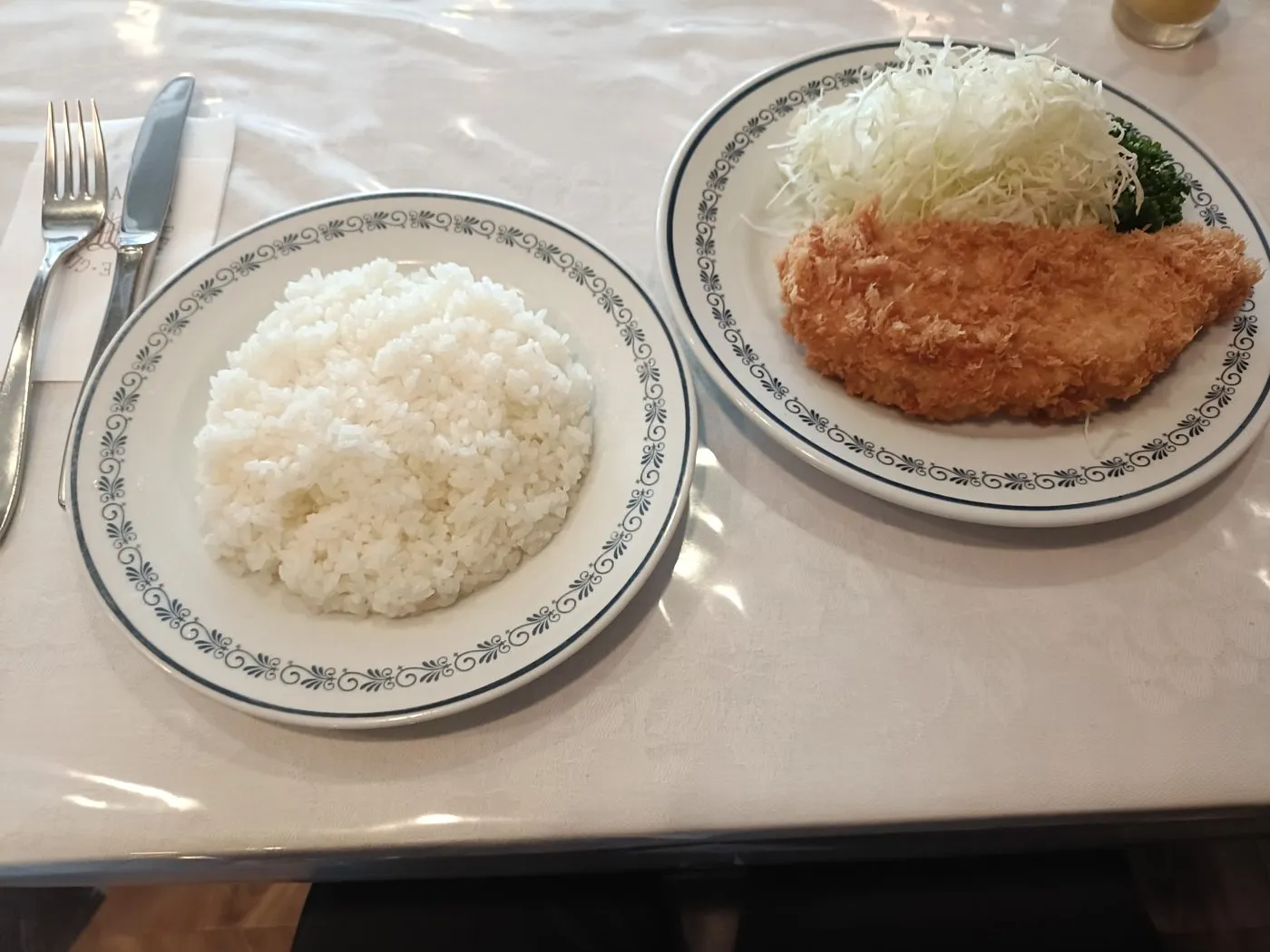
We ordered the house pork cutlet. On the menu it is the “original pork cutlet” (ganso pōku katsuretsu). It still comes the old way: the cutlet with a mound of shredded cabbage on one plate, and rice on a separate plate. The cutlet was about ¥3,000, and the rice, ordered on its own, about ¥300. The coating was light and crisp, and the pork inside was soft and tender. It is a simple, old-fashioned plate, and that is the point.
The original pork cutlet at Rengatei, with rice on its own plate.
Who eats here: regulars, not tour groups
The second floor feels like the inside of an old Western-style house. At that hour, most of the diners were regulars, and many of them were older. They looked like people who have liked Ginza for a long time and come here because it has always been here. We saw very few tourists.
That is the real reason to come. Ginza today is luxury brands and glass towers, but at Rengatei you can taste a retro Japan: quiet rooms, an old menu, and a lunch that has hardly changed. If you want a break from crowded, Instagram-famous restaurants, this is a good one.
 Related guidesJapanese Snack Subscription Box: Bokksu vs Sakuraco vs TokyoTreat From $32.50/mo
A short history, told by the restaurant
The Ginza official shop page says Rengatei opened in Ginza in 1895 as a Western-style restaurant, and that it developed pork cutlets and other fried foods, omelette rice (omuraisu) and hayashi rice. It also calls Rengatei the first restaurant in Japan to be called a Western-style restaurant.
Time Out Tokyo tells the story of the cutlet in more detail. The model was the French cutlet, made with beef. Rengatei switched to pork, which Japanese diners already knew, and instead of pan-frying it in butter, it deep-fried it in a house blend of oil, an idea taken from tempura. Even the shredded cabbage has a story: during the Russo-Japanese War (1904–05) the cooks were called up as soldiers, and the short-handed kitchen swapped the slow cooked vegetables for raw cabbage. That pile of cabbage next to almost every tonkatsu in Japan today is said to start here.
We could not find Rengatei’s own website, and these claims come from the restaurant and the Ginza district page, not from historians. Read them as the restaurant’s own story. Omelette rice in particular has more than one birthplace story: Hokkyokusei in Osaka also claims it. We did not order the omelette rice on this visit, so we cannot tell you how it compares. Our guide to yoshoku and Japanese-style Chinese food explains the dishes and the other old restaurants.
Hours and how to get there
| Address | 3-5-16 Ginza, Chuo City, Tokyo |
| Lunch | 11:15–15:00 (last order 14:00) |
| Dinner | 17:30–21:00 (last order 20:00) |
| Open | Monday to Saturday and public holidays |
| Closed | Sundays, end of August, New Year holidays |
| Phone | 03-3561-3882 |
From the Ginza official website shop page, checked on 7 November 2026. The page notes that shop details may change, so check before you go.
Restaurant listings put it about three minutes on foot from Ginza Station on the Tokyo Metro.
Before you go
- No reservations. The restaurant says on its Tabelog listing that it does not take bookings, so just turn up.
- Timing. We went just after noon on a weekday and did not wait. We have not been at other times.
- Sunday. It is closed on Sundays.
- Payment. Listings say cards are not accepted. Bring cash.
- Budget. About ¥3,000 for the cutlet and ¥300 for rice on our visit. Rice comes separately, so order it with your cutlet if you want a full meal.
If one old cutlet made you curious about what else counts as yoshoku, which would you try next: hayashi rice, Neapolitan spaghetti or the hotel-born dishes of Yokohama? Our guide to yoshoku and Japanese-style Chinese food covers them, and a Tokyo food tour is an easy way to try more old diners with a guide.