 Eastbound Finds
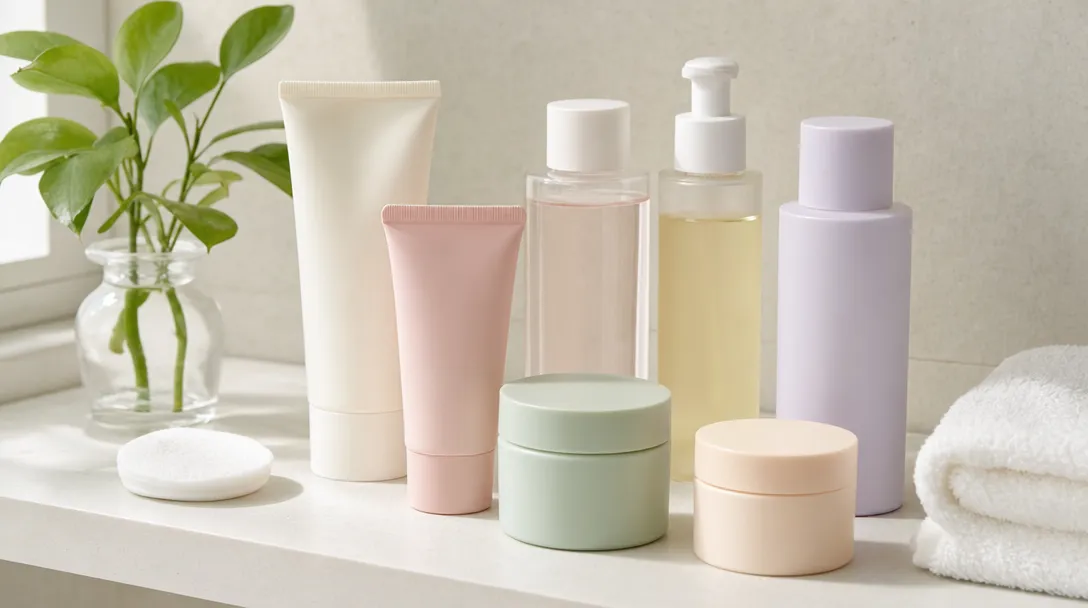
Hana here – let’s sort out the order first, then the shopping. The short answer: cleanse, toner, essence or serum, moisturizer, and sunscreen last in the morning, always from the thinnest texture to the thickest. Below you’ll find what makes Korean skincare different, how to pick textures for your skin, and how to buy the real thing in the US now that small parcels from abroad can owe duty. Rules, retailers and figures checked on 15 October 2026.
Key points
- The basic Korean skincare order is cleanser, toner, essence or serum, moisturizer, and sunscreen as the last morning step; at night an oil cleanser comes first.
- The general rule is thinnest to thickest texture, and most people do not need all 10 steps every day.
- Korean law has a separate 'functional cosmetics' category for products aiding skin whitening, wrinkle improvement or UV protection, which need a review or report to Korea's Ministry of Food and Drug Safety.
Show more
- Cosmetics sold in the US must carry required label information in English, and since MoCRA the company named on the label must list the product with the FDA and report serious adverse events.
- CBP has suspended duty-free de minimis entry for shipments of $800 or less from all countries, so an order shipped from Korea can owe duties and carrier fees.
This is general information about how products are used, not medical advice. If you have a skin condition, talk to a dermatologist.
What makes Korean skincare different
Three facts explain a lot about how K-beauty products look and feel:
AdvertisingQuick pick: COSRX skincare – Amazon.com
 Mikan's note: Wait! A box with only Korean text was made for the Korean market, not the US: there is no English ingredient list or US company to contact. If you have a skin condition or use a prescription cream, ask your dermatologist before adding acids or retinol.
- Korea has a legal category for “functional” cosmetics. Korea’s Cosmetics Act defines functional cosmetics as products “aiding in the whitening of the skin”, “aiding in improving wrinkles”, or “aiding in tanning skin gently or protecting skin from ultraviolet rays”, among others. Before selling one, the company must undergo an examination by, or submit a report to, the Ministry of Food and Drug Safety (MFDS). That is why Korean boxes often carry a line such as 기능성화장품 (“functional cosmetic”). It is a regulatory label in Korea, not a promise of results for you.
- Textures are engineered for layering. Korean brands sell toners, essences, serums and ampoules as separate thin layers instead of one thick cream. The cushion compact is a good example of this thinking: Amorepacific says it began research in January 2007, tested over 3,600 times with 200 different sponge types, and launched the IOPE Air Cushion in March 2008 as a sun-protection product that was easier to carry than a tube.
- It is a big export industry. Korea’s Ministry of Food and Drug Safety reported cosmetics exports of $11.4 billion in 2025, second only to France, with skincare making up 74.7% and the US as the largest market at $2.2 billion (MFDS press release, 22 May 2026). That is why so many brands now make US versions.
The routine order at a glance
| Step | Night | Morning | What it is |
|---|---|---|---|
| 1. Cleanse | Oil or balm cleanser, then a water-based cleanser (double cleansing) | Gentle cleanser or just water | Oil lifts sunscreen and make-up |
| 2. Toner | ✓ | ✓ | Thin and usually hydrating, not astringent |
| 3. Essence, serum or ampoule | ✓ | ✓ | One product is enough to start |
| 4. Moisturizer | ✓ | ✓ | Gel or cream depending on skin type |
| 5. Sunscreen | – | ✓ (last step) | See Japanese vs Korean sunscreen |
Extras such as sheet masks, exfoliating toners, eye creams and “sleeping masks” go on top of this base when you want them. They are not daily steps, and an exfoliating product should follow the frequency on its own label.
Toner, essence, serum, ampoule: which one do you need?
These names describe texture and concentration more than a fixed function. Toners are the thinnest, essences are a little thicker, and serums and ampoules are the most concentrated. If you are starting out, pick one of the middle steps for your main concern (dryness, oil, uneven tone) and skip the rest. More layers mean more chances for irritation and more money spent.
Related guidesJapanese Drugstore Skincare: Quasi-Drug Labels and Spotting the Japanese VersionChoosing textures for your skin
| Skin | Look for | Watch out for |
|---|---|---|
| Oily | Gel moisturizer, light essence, gentle foam cleanser | Over-cleansing and daily exfoliation |
| Dry | Richer cream, hydrating toner, a second hydrating layer | Toners with a lot of alcohol |
| Combination | Light gel all over, richer cream only on dry areas | Using one heavy cream everywhere |
| Sensitive | Few ingredients, fragrance-free | Adding several new products at once |
| Mature or very dry | Cream textures, an essence under the moisturizer | Too many active ingredients together |
| Acne-prone | Light, non-greasy textures | Treating acne yourself with stacked acids – see a dermatologist |
The same order works for men. Shaving already irritates the skin, so skip alcohol-heavy toners right after shaving.
Buying Korean skincare in the US
Read the box before you buy
The FDA’s labeling guide says all label statements required by law must be in English, and imported products must name the country of origin. Every product sold in the US should therefore show an English ingredient list (in descending order), the net quantity, and the name and place of business of the manufacturer, packer or distributor.
Since the Modernization of Cosmetics Regulation Act (MoCRA), the company named on the label (the “responsible person”) must list each cosmetic with the FDA and report serious adverse events to the FDA within 15 business days. A box with only Korean text was made for Korea, where the law requires labels in Korean, so there is no US company behind it.
Two more US details matter for K-beauty:
- Claims can turn a cosmetic into a drug. The FDA says products claiming to “increase or decrease the production of melanin” are drugs, and acne treatments and sunscreens are over-the-counter drugs. A Korean “functional” brightening or sun product may be sold in the US in a different version, or not at all. Beauty of Joseon, for example, says that apart from its Daily Relief Sunscreen SPF 40, its sunscreens are not sold in its official Amazon US store.
- If something goes wrong, you can report a rash or other reaction to the FDA through MedWatch (Form 3500B for consumers).
Where to buy: authorized US sellers
| Brand | US sellers on the brand’s own list (checked 15 Oct 2026) |
|---|---|
| COSRX | Amazon, ULTA, Dermstore, Costco, JCPenney, Macy’s, Walmart, Nordstrom, Revolve, Soko Glam and others |
| Beauty of Joseon | Amazon (official storefront), Sephora, Costco, TikTok and several K-beauty shops |
If a marketplace seller is not on the brand’s list, treat it with care. Check that the seal is intact, the printing is sharp, and the batch number and expiry date are present. Beauty of Joseon points buyers to its global site and authorized-retailer list, and COSRX has a “Verify Authenticity” page.
Ordering from Korea
US Customs and Border Protection (CBP) has suspended duty-free de minimis entry for goods worth $800 or less from all countries and all modes, including international mail. Its FAQ says “all applicable duties, taxes, fees, exactions, and charges must be paid”, and rates depend on the product’s tariff classification. Before you order from a Korean shop, check whether duties are charged at checkout or collected by the carrier on delivery. For how gifts and carriers handle this, see Japanese gifts you can order online.
When a Korean routine is not a good fit
- You have a diagnosed skin condition (eczema, rosacea, acne on prescription treatment). Ask your dermatologist which steps to keep; a long routine can clash with prescribed creams.
- You want one product to do everything. A good moisturizer and sunscreen are a complete routine. Layering is optional.
- You’d order a single item from Korea. Shipping and possible duty can cost more than buying the US version from an authorized seller.
- You react easily to fragrance or essential oils. Many products are fragrance-free, but not all; read the ingredient list every time.
Your next three steps
- Start with cleanser, moisturizer and sunscreen for two weeks.
- Add one product (a hydrating toner or one serum), then wait a few days before adding another.
- Buy from the brand’s site or a seller on its authorized list, and keep the box until you are sure the product suits you.
Checked 15 October 2026 on the FDA, CBP, KLRI (Korean Cosmetics Act), MFDS, Amorepacific, COSRX and Beauty of Joseon pages. Rules and retailer lists change, so check again before a big order.